


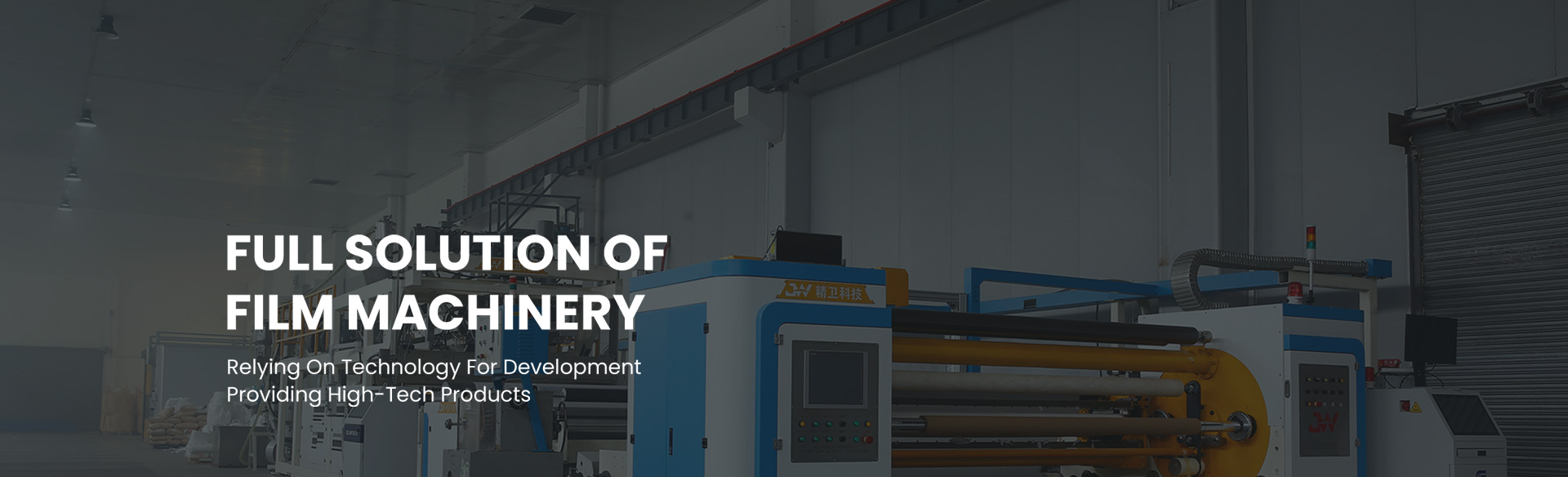
Film Casting Machine With Automatic Control Vs Manual Operation: Which Is Better?
As film production becomes more competitive, manufacturers are paying more attention to automation, production efficiency, and quality consistency. When selecting a film casting machine, one important decision is whether to choose a fully automatic control system or a machine that relies mainly on manual operation.
Both automatic and manual film casting machines can produce high-quality films, but they have significant differences in labor requirements, production stability, process control, and long-term operating costs.
A manual operation system may be suitable for smaller production requirements with simpler processes, while an automatic film casting machine is designed for manufacturers seeking higher efficiency, stable quality, and intelligent production management.
As a professional film machinery manufacturer, JINGWEI provides advanced cast film production solutions with automatic control systems, including Pe Film Casting Machines, Breathable Film Casting Machines, Printing systems, slitting systems, and digital production management solutions. (JINGWEI)
Basic Difference Between Automatic and Manual Film Casting Machines
The main difference between automatic and manual operation is the level of process control and human involvement.
A manual film casting machine requires operators to adjust many production parameters, including temperature, speed, tension, and winding conditions.
An automatic film casting machine uses sensors, PLC control systems, servo motors, and digital monitoring technology to automatically manage production parameters.
| Comparison | Manual Operation | Automatic Control |
|---|---|---|
| Human involvement | High | Lower |
| Production adjustment | Manual setting | Automatic adjustment |
| Quality consistency | Depends on operator experience | More stable |
| Labor requirement | Higher | Lower |
| Production data tracking | Limited | Available |
| Error control | More difficult | More accurate |
Modern cast film production lines increasingly integrate automatic thickness measurement, defect detection, and MES production management systems to improve production visibility and process control. (JINGWEI)
Manufacturing Process Comparison
Manual Film Casting Production Process
A traditional manual operation process usually includes:
Raw material feeding
Extrusion melting
Die adjustment
Cooling roller adjustment
Film thickness checking
Winding adjustment
Quality inspection
Operators need to monitor production conditions and make adjustments according to experience.
Advantages include:
Lower initial investment
Simple operation structure
Suitable for basic production requirements
Easier for small-scale projects
However, manual operation may create differences between production batches because results depend heavily on operator skills.
Automatic Film Casting Production Process
An automatic film casting machine integrates intelligent control throughout the production process.
The process includes:
Automatic material feeding
Precise extrusion control
Automatic temperature adjustment
Online thickness monitoring
Automatic tension control
Automatic winding management
Digital production recording
JINGWEI cast film production lines integrate extrusion systems, precision die heads, cooling and shaping systems, automatic winding devices, tension control systems, and central control platforms to achieve continuous automated operation. (JINGWEI)
Production Efficiency Comparison
Automation mainly improves production efficiency by reducing manual intervention and increasing process stability.
| Efficiency Factor | Manual System | Automatic System |
|---|---|---|
| Production speed | Moderate | Higher |
| Changeover efficiency | Slower | Faster |
| Labor dependence | High | Lower |
| Continuous operation | Limited | Strong |
| Production monitoring | Basic | Real-time |
For example, JINGWEI cast film integrated production lines combine casting, printing, and slitting processes into one system. The integrated design eliminates repeated film roll transfer processes and can improve overall production efficiency by more than 30%. (JINGWEI)
Film Quality and Process Stability
Film quality is one of the most important factors when comparing automatic and manual systems.
Film production requires precise control of:
Film thickness
Cooling temperature
Extrusion pressure
Film tension
Winding quality
| Quality Factor | Manual Operation | Automatic Control |
|---|---|---|
| Thickness consistency | Depends on operator | Higher accuracy |
| Surface quality | Operator dependent | More stable |
| Production repeatability | Medium | High |
| Defect detection | Manual inspection | Automatic monitoring |
Automatic systems reduce human errors and help maintain consistent film performance during long production cycles.
JINGWEI production lines support optional online automatic thickness measuring systems and defect detection systems to improve quality control. (JINGWEI)
Equipment Investment and Operating Cost Comparison
The initial cost difference between automatic and manual systems is an important consideration.
| Cost Factor | Manual Machine | Automatic Machine |
|---|---|---|
| Initial investment | Lower | Higher |
| Labor cost | Higher | Lower |
| Maintenance requirement | Simpler | More technical |
| Production efficiency | Moderate | Higher |
| Long-term return | Limited | Better potential |
Although automatic systems require higher investment, they can reduce labor dependence and improve production efficiency over long-term operation.
Material Standards and Automation Requirements
Different film materials have different requirements for process control.
Common materials used in film casting include:
PE
PP
TPU
Functional polymer materials
For standard PE film production, manual operation may meet basic requirements.
For advanced applications such as:
Breathable films
Hygiene materials
Multi-layer functional films
Medical-related films
automatic control becomes more valuable because these products require tighter process accuracy.
A professional film machinery manufacturer should evaluate:
Material characteristics
Film application
Production capacity
Quality requirements
Automation expectations
Quality Control Checkpoints
Automatic systems provide more opportunities for real-time quality monitoring.
Important checkpoints include:
| Inspection Point | Purpose |
|---|---|
| Raw material inspection | Confirm material stability |
| Temperature monitoring | Maintain extrusion conditions |
| Thickness measurement | Control film uniformity |
| Surface inspection | Detect defects |
| Winding inspection | Ensure roll quality |
Manual systems usually rely more on operator inspection, while automatic systems can continuously collect production data and identify abnormal conditions.
Manufacturer vs Trader: Why Technical Support Matters
Film casting machines are complex production systems. Choosing a manufacturer with engineering capability provides advantages beyond equipment supply.
A professional manufacturer can provide:
Production line design
Equipment customization
Process optimization
Installation support
Technical training
After-sales service
JINGWEI focuses on complete film machinery solutions and provides customized equipment according to different production requirements, covering breathable film machines, PE film casting machines, printing machines, slitting machines, laminating machines, and automation systems. (JINGWEI)
OEM and Customized Automation Solutions
Different manufacturers have different automation requirements.
A customized film casting machine project usually includes:
Production requirement analysis
Film application evaluation
Equipment configuration design
Automation system selection
Manufacturing and testing
Installation commissioning
Customization options may include:
Automatic feeding system
Online thickness measurement
Defect detection system
MES production management
Automatic winding system
Bulk Supply and Project Sourcing Checklist
Before selecting an automatic or manual film casting machine, manufacturers should evaluate:
| Evaluation Item | Key Question |
|---|---|
| Production volume | Is continuous production required? |
| Film quality | How strict are quality standards? |
| Labor availability | Is automation needed to reduce labor? |
| Material type | What polymers are processed? |
| Future expansion | Can the system be upgraded? |
| Technical support | Is engineering service available? |
Export Market Compliance Considerations
For international equipment projects, stable operation and technical support are critical.
A professional supplier should provide:
Machine documentation
Installation guidance
Spare parts support
Remote troubleshooting
Production optimization
Digital systems such as MES production management help improve traceability and production transparency for modern manufacturing environments. (JINGWEI)
Which Film Casting Machine Is Better?
A manual film casting machine is suitable for manufacturers who need:
Lower investment
Simple production processes
Smaller production capacity
Basic film applications
An automatic film casting machine is more suitable for manufacturers who need:
Higher production efficiency
Stable film quality
Lower labor dependence
Intelligent production management
The better choice depends on production goals, product requirements, and future development plans.
JINGWEI provides professional film machinery solutions with advanced automation technology, customized engineering capability, and complete project support. Through intelligent control systems and reliable manufacturing processes, JINGWEI helps manufacturers build efficient and stable film production lines.