


PE Film Casting Machine vs TPU Film Casting Machine: Which Material Requires Different Equipment?
Choosing the right film casting machine depends heavily on the characteristics of the raw material and the performance requirements of the final film. Although PE and TPU films are both produced through extrusion and casting processes, they have significant differences in melting behavior, processing temperature, elasticity, and application requirements.
A Pe Film Casting Machine is mainly designed for polyethylene materials used in hygiene products, packaging films, and protective applications. A TPU film casting machine requires more precise temperature control and material handling because thermoplastic polyurethane has unique elasticity, transparency, and processing characteristics.
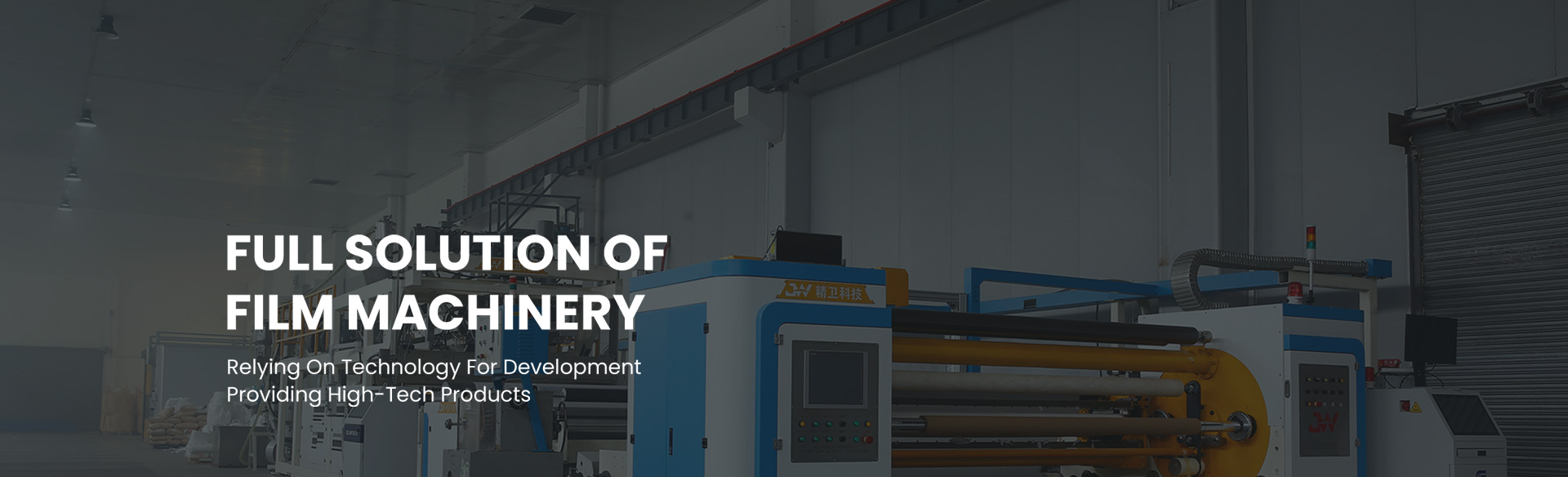
As a professional film machinery manufacturer, JINGWEI provides customized film production solutions, including PE film casting machines, Breathable Film Casting Machines, and complete cast film production systems. The equipment is designed according to different material characteristics, production capacity requirements, and application scenarios. (JINGWEI)
Basic Difference Between PE Film and TPU Film
The biggest difference between PE and TPU films is their material properties.
PE is a widely used polyolefin material known for its chemical resistance, flexibility, lightweight structure, and cost efficiency. TPU is an engineering thermoplastic material that combines elasticity, abrasion resistance, and high-performance characteristics.
| Comparison | PE Film | TPU Film |
|---|---|---|
| Material type | Polyethylene | Thermoplastic polyurethane |
| Main advantage | Cost efficiency and stability | Elasticity and durability |
| Flexibility | Good | Excellent |
| Elastic recovery | Limited | High |
| Chemical resistance | Strong | Strong |
| Production difficulty | Moderate | Higher |
PE films are widely used in hygiene materials, packaging, and industrial applications, while TPU films are commonly applied in medical materials, protective films, automotive components, and high-performance applications.
Different Equipment Requirements for PE and TPU Materials
Although both materials can be processed by film casting technology, the equipment requirements are different.
A PE film casting machine mainly focuses on:
Stable extrusion output
Uniform film thickness
Efficient cooling
Continuous production
A TPU film casting machine requires stronger control over:
Processing temperature
Material drying
Melt stability
Cooling conditions
Film stretching behavior
TPU is sensitive to moisture and processing conditions. Poor temperature control or improper material handling may affect transparency, mechanical strength, and film surface quality.
Manufacturing Process Comparison
PE Film Casting Process
The PE film casting process usually includes:
Raw material feeding
Extrusion melting
Melt filtration
Flat die forming
Cooling roller shaping
Thickness adjustment
Automatic winding
PE film production focuses on achieving:
Stable output
Uniform thickness
Smooth surface
High production efficiency
JINGWEI PE film casting equipment integrates extrusion systems, cast film dies, cooling roller groups, traction systems, winding systems, and optional digital modules such as online thickness measurement and MES production management. (JINGWEI)
TPU Film Casting Process
TPU film production requires more specialized processing control.
The process generally includes:
TPU material preparation
Controlled drying
Extrusion plasticization
Precision die extrusion
Cooling and forming
Film inspection
Winding
Because TPU has a narrower processing window than PE, temperature stability and extrusion precision become more important.
Equipment Performance Comparison
Different materials require different machine configurations.
| Equipment Factor | PE Film Casting Machine | TPU Film Casting Machine |
|---|---|---|
| Temperature control | Standard precision | Higher precision required |
| Material handling | Easier | More sensitive |
| Production stability | High | Requires advanced control |
| Processing difficulty | Moderate | Higher |
| Application range | Wide | Specialized |
For PE materials, manufacturers usually prioritize production efficiency and output stability.
For TPU materials, manufacturers focus more on process accuracy and maintaining material performance.
Material Standards and Processing Requirements
Material characteristics determine equipment configuration.
PE Film Production Requirements
PE film production commonly considers:
Melt flow index
Material purity
Film thickness
Tensile strength
Surface quality
Typical PE applications include:
Baby diaper back sheets
Sanitary products
Packaging films
Protective films
TPU Film Production Requirements
TPU film production requires attention to:
Moisture control
Melt temperature
Elastic performance
Transparency
Mechanical strength
TPU materials are often used where films need:
High flexibility
Wear resistance
Elastic recovery
Premium surface performance
A professional machinery manufacturer should evaluate material properties before designing the production line.
Quality Control Differences
Quality control requirements vary between PE and TPU film production.
| Quality Control Point | PE Film | TPU Film |
|---|---|---|
| Thickness inspection | Essential | Essential |
| Temperature monitoring | Important | Critical |
| Surface inspection | Important | Critical |
| Material moisture control | Moderate | Very important |
| Mechanical testing | Required | Required |
For PE film production, thickness consistency and surface quality are major evaluation factors.
For TPU film production, manufacturers must additionally control elasticity, transparency, and material stability.
Production Cost and Investment Comparison
The material difference also affects equipment investment.
| Cost Factor | PE Film Casting Machine | TPU Film Casting Machine |
|---|---|---|
| Raw material cost | Lower | Higher |
| Equipment complexity | Moderate | Higher |
| Technical requirement | Standard | Advanced |
| Maintenance requirement | Easier | More specialized |
| Market value | General applications | Higher-value applications |
PE film production is often selected for large-volume markets where efficiency and cost control are important.
TPU film production usually targets specialized applications where higher product value can justify more advanced equipment investment.
Manufacturer vs Trader: Why Technical Capability Matters
Film casting equipment is not a simple standard machine. The material characteristics directly influence machine structure, control systems, and production results.
Working with an experienced manufacturer provides advantages including:
Material evaluation
Customized equipment design
Process optimization
Production testing
Installation support
Technical service
JINGWEI focuses on complete film machinery solutions covering breathable film casting machines, PE film casting machines, printing machines, slitting machines, laminating machines, and automation equipment. (JINGWEI)
OEM and Customized Film Machinery Process
Different film applications require different machine configurations.
A customized equipment development process usually includes:
Application requirement analysis
Material evaluation
Production capacity planning
Machine configuration design
Equipment manufacturing
Factory testing
Installation commissioning
Customization options may include:
Film width
Production speed
Layer structure
Automation functions
Online inspection systems
Bulk Supply and Project Sourcing Checklist
Before selecting PE or TPU film casting equipment, manufacturers should evaluate:
| Evaluation Item | Key Question |
|---|---|
| Film application | What is the final product? |
| Material type | PE or TPU? |
| Production volume | What output is required? |
| Film performance | What properties are needed? |
| Quality standard | What inspection requirements apply? |
| Future expansion | Can the machine be upgraded? |
Export Market Compliance Considerations
For international film production projects, equipment reliability and technical support are important.
A professional supplier should provide:
Technical documentation
Installation guidance
Spare parts support
Remote diagnosis
Production optimization services
JINGWEI integrates digital production solutions, including MES management systems and remote diagnosis technology, to support efficient equipment operation and factory management. (JINGWEI)
Which Film Casting Machine Should You Choose?
A PE film casting machine is more suitable for manufacturers producing:
Hygiene films
Packaging films
Protective films
General polyethylene films
A TPU film casting machine is more suitable for manufacturers producing:
Medical films
Elastic films
Protective materials
High-performance functional films
The correct equipment choice depends on material properties, production targets, application requirements, and future market strategy.
JINGWEI provides professional film machinery solutions with customized engineering capability, advanced manufacturing processes, and complete project support. From PE film casting machines to functional film production systems, JINGWEI helps manufacturers build stable and efficient film production capabilities.