


Testing And Acceptance Criteria for Multi-Layer Laminating Lines
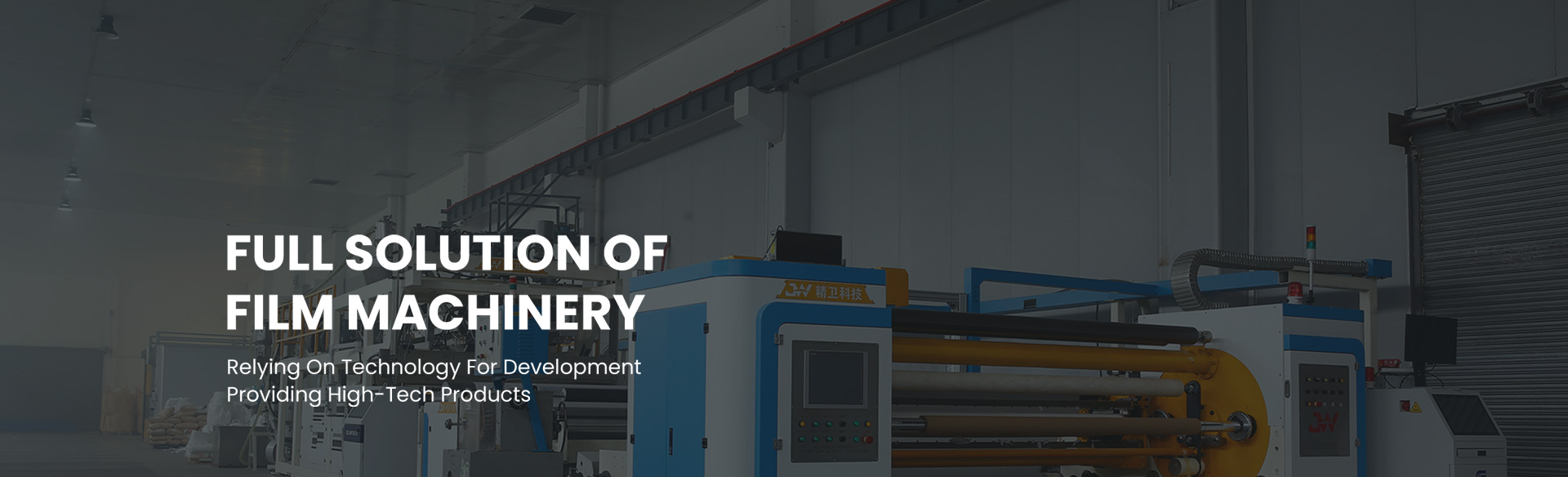
A reliable multi-layer laminating line is judged by more than output speed. What matters in real production is whether the line can keep layer structure stable, bonding performance repeatable, roll quality consistent, and compliance documents complete across every shipment. For project buyers, that is the difference between a machine that runs in a showroom and a machine that keeps running in a factory. JINGWEI positions itself as a film machinery manufacturer focused on research, design, production, and sales, and its product range already covers hot-melt laminating machines, film casting, Printing, Slitting, rewinding, inspection rewinding, silicone coating, and integrated converting solutions. That kind of full-process capability is important because acceptance criteria should be built around the entire line, not one isolated machine.
Why testing standards matter before final acceptance
In multilayer lamination, the acceptance process should begin before shipment, continue during factory acceptance testing, and finish again at site acceptance after installation. A trader may only confirm appearance and startup, but a manufacturer with engineering control is expected to verify web handling stability, adhesive application, lamination bonding, winding quality, electrical safety, and downstream compatibility. This is where manufacturer vs trader differences become visible. A real manufacturer can connect process data, component selection, control logic, and after-sales adjustments into one traceable system. JINGWEI highlights complete film machinery solutions and technical support, upgrades, retrofits, parts, after-sales service, and training, which supports that more complete acceptance model.
Core checkpoints in a manufacturing process overview
For a multi-layer laminating line, the testing flow should follow the actual converting sequence. The usual checkpoints include unwinding tension stability, web guiding accuracy, coating or adhesive uniformity, nip pressure consistency, heating zone stability, lamination bond performance, cooling effect, slitting quality if integrated, and rewinding roll build. For thin plastic film structures, tensile verification is often tied to ASTM D882, which covers thin sheeting and films below 1.0 mm thickness. Seal strength and bond evaluation are commonly tied to ASTM F88 for flexible barrier materials, while bond testing through the lamination process is often referenced with ASTM F904 in technical practice. These standards help turn machine acceptance into measurable data instead of operator opinion.
What should be included in the project sourcing checklist
Before approving a line, buyers should ask for a documented project sourcing checklist with at least these items:
Raw material range and layer structure confirmation
Target product width, speed, coating method, and finished roll diameter
Heating method and temperature control range
Tension control logic for each unwind and rewind station
Electrical safety standard used for control cabinet and machine wiring
FAT records, trial run samples, and defect log
Spare parts list and maintenance schedule
Export compliance documents for destination market
OEM or ODM change list for customized functions
Training plan for installation, commissioning, and operator use
This matters even more for bulk supply considerations. Once several lines or repeated configurations are involved, undocumented changes create risk in spare part mismatch, commissioning delays, and inconsistent product quality across plants.
Acceptance criteria that should be written into the contract
The best acceptance criteria are measurable. A good contract should define not only whether the line can run, but how well it must run. Typical line acceptance items include:
| Item | Acceptance focus | Practical evidence |
|---|---|---|
| Running stability | Continuous operation without abnormal stop | FAT and SAT run records |
| Layer bonding | Stable bond strength across width and length | Lab test report using agreed method |
| Width control | Finished width stays within agreed tolerance | Sample measurement record |
| Tension control | No obvious wrinkle, tunnel, curl, or telescoping | Trial roll inspection |
| Winding quality | Roll edges neat, build uniform, no collapse | Finished roll photos and inspection |
| Heating control | Temperature remains stable during production | Temperature trend log |
| Surface quality | No bubbles, voids, contamination, or visible transfer defect | Visual inspection and sample archive |
| Electrical safety | Control system complies with agreed machine safety standard | Electrical drawings and compliance file |
AQL-based inspection can also be added for finished rolls or machine components. ISO 2859-1 defines an acceptance sampling system indexed by acceptance quality limit for inspection by attributes, making it useful when the project includes multiple machines, spare parts kits, or repeated finished sample lots.
Quality control checkpoints that show real manufacturing strength
Quality control checkpoints should be spread across the build stage and the trial stage. During machine manufacturing, the key controls are frame fabrication, roller machining accuracy, heating unit verification, coating section assembly, servo and drive calibration, electrical cabinet wiring, and software parameter validation. During trial production, the focus shifts to web path behavior, adhesive transfer, nip response, temperature balance, roll profile, and defect repeatability.
This is where OEM and ODM process control becomes critical. In an OEM project, the machine may follow a standard base platform with custom branding, voltage, guarding, width, or configuration. In an ODM project, the supplier may need to modify line layout, coating section logic, rewinding method, inspection modules, or digital functions. JINGWEI states that it provides complete film processing solutions and emphasizes digitization, technical support, upgrades, retrofits, and training, which are all strong indicators for projects that need more than standard catalog supply.
Material standards used for verifying laminated output
Machine acceptance should always be linked to the structure being produced. For thin films, tensile data can be checked under ASTM D882. For flexible barrier seal performance, ASTM F88 is widely used to measure the force required to separate a sealed test strip. For packaging environments that demand controlled seal integrity validation, ISO 11607-1 references multiple test methods for package seal quality and integrity, including ASTM methods for leak and seal evaluation. This is important because line acceptance is incomplete if it only proves the machine can laminate and does not prove the laminate can perform in end use.
Export market compliance cannot be treated as an afterthought
For export projects, machinery compliance should be reviewed as early as design confirmation. IEC 60204-1 applies to electrical, electronic, and programmable electronic equipment of machines and is a key reference for machine electrical safety. In the European market, Regulation EU 2023/1230 replaces the Machinery Directive and applies from January 20, 2027, so suppliers shipping into Europe should already be preparing documentation, risk assessment, and technical files to match the new framework. A supplier with integrated engineering is usually better prepared for this than a pure trading company because compliance depends on real design control, not just document collection.
Why JINGWEI fits projects that require measurable acceptance
JINGWEI’s public product scope shows a broader converting system rather than a single isolated machine. Its portfolio includes Hot-Melt Laminating Machines, printing, slitting, rewinding, silicone coating, and integrated production solutions, while its service structure includes technical support, after-sales service, upgrades, retrofits, parts, and training. The company also presents itself as a high-tech enterprise focused on research, design, production, and sales, with digitization and customized solutions as part of its positioning. For buyers reviewing multi-layer laminating lines, that combination matters because acceptance is strongest when one manufacturer can take responsibility for process design, machine build, testing logic, and later optimization.
Final view
Testing and acceptance criteria for multi-layer laminating lines should never stop at startup speed or general appearance. A dependable evaluation system checks process stability, bond performance, roll quality, material verification, electrical safety, OEM or ODM feasibility, and export compliance in one connected workflow. That is the standard buyers should use when comparing a manufacturer with a trader. When the supplier can support the full converting chain and document every checkpoint with test records, acceptance becomes clearer, risk becomes lower, and production becomes easier to scale.