


Calibration And Performance Verification in High-Speed Slitting Machines
In high-volume film converting, calibration and performance verification in high-speed slitting machines determine whether a line can hold stable width, clean edges, controlled tension, and uniform finished rolls through continuous production. For sourcing teams, machine speed alone is never enough. A stable Slitting result depends on how the equipment is calibrated before delivery and how its real operating data is verified under production conditions. JINGWEI positions itself as a direct equipment manufacturer with integrated film processing solutions that include slitting, inspection rewinding, Printing, lamination, and film casting equipment, which gives buyers a clearer manufacturing chain than working through a trader.
Manufacturer Control Creates More Reliable Verification
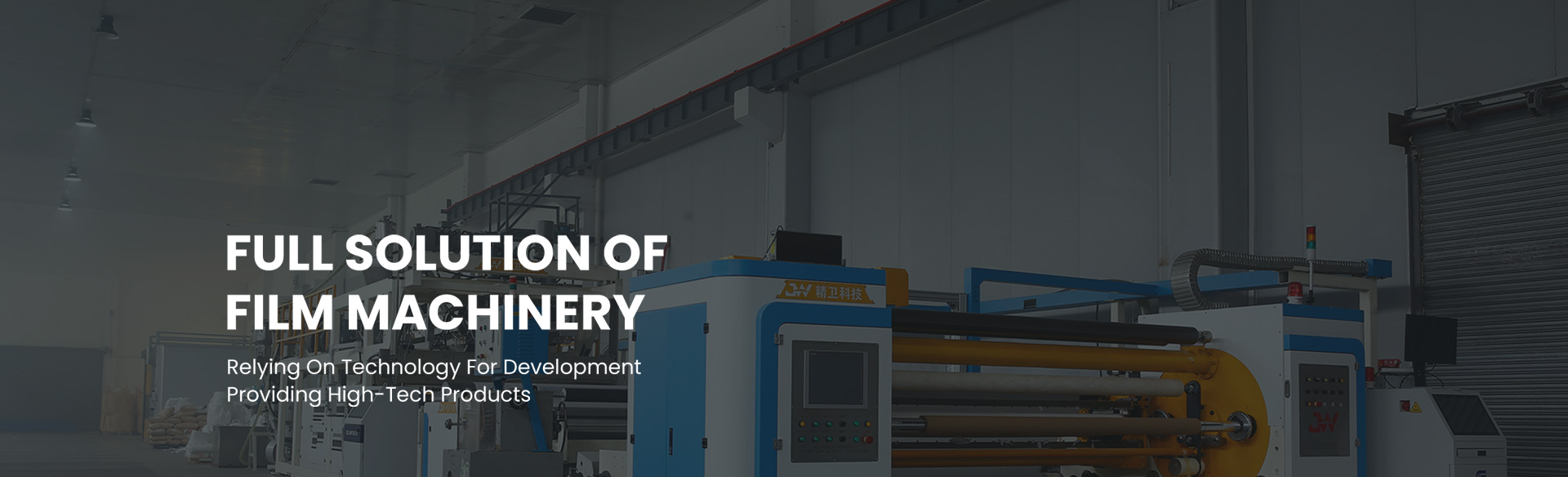
In a manufacturer vs trader comparison, the main difference is process ownership. A manufacturer can control frame welding accuracy, knife assembly, guide correction settings, tension architecture, drive coordination, and final test records. JINGWEI’s high-speed slitting machine structure includes an unwinding unit, deviation correction control, pneumatic knife system, slip shaft winding system, pressure control roller, tension detection dancer roller, and central control system. These are exactly the modules that must be calibrated and verified before a line is released for shipment.
Key Calibration Points Before Performance Testing
The first checkpoint is web guiding accuracy. Misalignment at high speed can quickly create uneven slit width, poor edge quality, and unstable roll formation. JINGWEI states that its film slitting and rewinding equipment uses a CCD guide correction system, which shows that web tracking is treated as a core control point. The second checkpoint is tension calibration. The unwinding, mid-web transport, and rewinding sections must stay balanced so the material does not wrinkle, stretch, or telescope. The third checkpoint is knife setting verification, including blade overlap, pressure consistency, and knife path stability across different materials.
The fourth checkpoint is speed curve validation. JINGWEI’s single-shaft high-speed slitting machine notes PLC-based control, touch interface adjustment, customizable tension values, acceleration settings, and speed curve management with parameter memory. That matters because a machine should not only reach target speed. It should accelerate, run, and decelerate without disturbing roll hardness or edge quality. A recent JINGWEI product page for a high-speed single-shaft model also states a maximum slitting speed of 500 meters per minute with material widths up to 2500 millimeters, which makes calibration even more important under continuous industrial output.
Performance Verification Should Follow A Clear Checklist
A practical project sourcing checklist should include trial material range, slit width tolerance, edge quality review, roll surface inspection, tension stability records, and parameter repeatability after specification changes. This is especially important in OEM / ODM process work, where buyers may require different film structures, widths, roll diameters, or winding standards. JINGWEI’s integrated product range across slitting, inspection rewinding, and film converting helps support this kind of coordinated verification rather than isolated single-machine delivery.
| Verification item | What should be checked | Why it matters |
|---|---|---|
| Guide correction | Web tracking stability | Protects slit width consistency |
| Tension control | Unwind and rewind balance | Reduces wrinkles and telescoping |
| Knife setup | Blade overlap and edge finish | Improves cut quality |
| Speed validation | Stable run at target output | Confirms continuous production ability |
| Parameter repeatability | Same result after job change | Supports bulk order consistency |
| FAT records | Measured data and test logs | Improves traceability |
Material Standards And Export Compliance Matter Early
Performance verification also depends on the material standard used during testing. Plastic film, composite film, and non-woven materials respond differently to tension, knife pressure, and winding conditions, and JINGWEI identifies these as key application materials for its slitting equipment. For export projects, buyers should also confirm machinery documentation and safety compliance early. The EU Machinery Directive 2006/42/EC lays down health and safety requirements for machinery placed on the European market, and industry guidance notes that it is being replaced by Regulation 2023/1230, which applies from January 20, 2027. For cross-border equipment supply, that makes technical files, manuals, electrical safety preparation, and declaration documents part of the performance review, not just an afterthought.
Why This Step Defines Long-Term Slitting Quality
High-speed slitting performance is proven through calibration discipline, not brochure claims. Buyers evaluating a high-speed slitting machine manufacturer should look closely at how guide control, tension settings, knife calibration, speed validation, and test documentation are managed before shipment. JINGWEI’s direct manufacturing model and integrated film converting equipment portfolio make that verification path more transparent, which is a strong advantage when consistency, project execution, and bulk supply reliability matter most.