


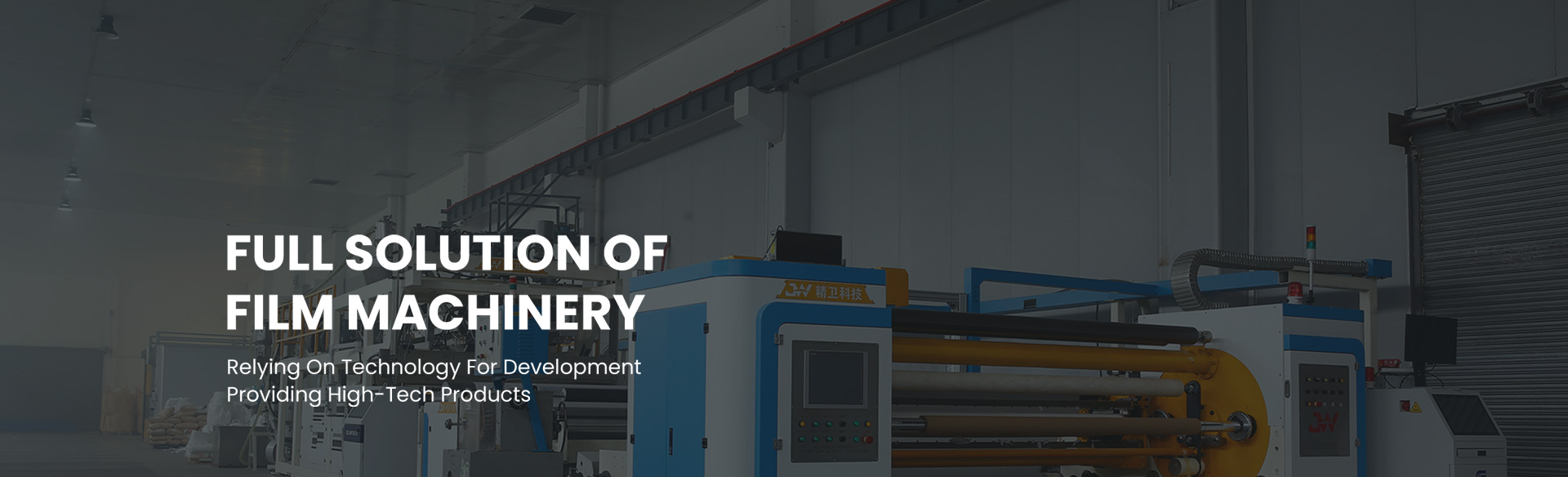
Automatic Winding Machine vs Manual Winding Equipment: Which Is More Efficient?
Automatic winding machines provide higher production efficiency through stable tension control, continuous operation, and reduced labor requirements compared with manual winding equipment.
What Is the Difference Between an Automatic Winding Machine and Manual Winding Equipment?
Automatic winding machines and manual winding equipment are both used to collect and form film rolls, but they provide different levels of production automation and control.
An automatic winding machine uses automated systems to manage material feeding, tension control, winding speed, roll formation, and production adjustments.
Manual winding equipment requires operators to control more production steps, including material handling, tension adjustment, and roll monitoring.
From a film machinery manufacturing perspective, the key difference is not only automation level but also production stability, efficiency, labor requirements, and finished roll quality.
How Does an Automatic Winding Machine Work?
Automated Control Creates Stable Film Rolls
An automatic winding machine is designed for continuous film production lines where stable roll quality is required.
The winding process typically includes:
Receiving film from the production line
Maintaining consistent web tension
Controlling winding speed
Adjusting roll pressure
Creating finished rolls automatically
Automatic winding systems help manufacturers achieve:
Uniform roll structure
Stable winding tension
Reduced wrinkles
Better edge alignment
Consistent roll quality
These advantages are especially important for high-speed film production where small variations can affect downstream processing.
How Does Manual Winding Equipment Work?
Human Operation Provides Basic Roll Handling
Manual winding equipment relies on operators to manage important production steps.
The operation usually involves:
Loading film materials
Adjusting winding parameters
Monitoring roll formation
Correcting tension issues
Removing finished rolls
Manual winding equipment can be suitable for:
Small production volumes
Testing operations
Basic film processing
Applications with limited automation requirements
However, production results may vary depending on operator experience and working conditions.
Why Is Automatic Winding More Efficient?
Continuous Operation Improves Production Capacity
Efficiency is one of the most important considerations in modern Film Manufacturing.
Automatic winding machines improve efficiency through:
Higher running speed
Reduced manual adjustment
Continuous production capability
Faster roll changing
Lower production interruptions
For manufacturers producing large quantities of film, automated winding helps increase output while maintaining consistent product quality.
Manual winding processes may become less efficient as production volume increases because more labor and monitoring are required.
Which Equipment Provides Better Roll Quality?
Precise Tension Control Improves Consistency
Film roll quality depends heavily on winding conditions.
Automatic winding machines provide better control over:
Web tension
Winding pressure
Roll hardness
Material alignment
Speed synchronization
Stable control helps prevent common problems such as:
Loose rolls
Uneven edges
Film wrinkles
Roll deformation
Manual winding equipment can achieve acceptable results, but maintaining consistent quality across large production quantities is more challenging.
Automatic Winding Machine vs Manual Winding Equipment: Key Comparison
| Comparison Factor | Automatic Winding Machine | Manual Winding Equipment |
|---|---|---|
| Automation Level | High automation | Mainly manual operation |
| Production Speed | Higher continuous output | Limited by operator speed |
| Tension Control | Automatic adjustment | Manual adjustment |
| Roll Consistency | More stable | Depends on operator skills |
| Labor Requirement | Lower | Higher |
| Production Scale | Large-volume manufacturing | Small-scale production |
Which Winding Equipment Is Better for Film Production Lines?
Production Volume Determines Equipment Selection
For manufacturers producing continuous film materials, automatic winding machines usually provide stronger advantages.
Applications include:
PE film production
breathable film production
Coated films
Printed films
Laminated materials
These industries require stable roll formation because finished rolls directly influence storage, transportation, and further processing.
Manual winding equipment may still be suitable for:
Small batch production
Product development
Low-volume manufacturing
The best choice depends on production goals, investment plans, and quality requirements.
Does Automatic Winding Reduce Manufacturing Costs?
Higher Efficiency Creates Long-Term Production Value
Although automatic winding machines require higher initial investment, they can provide long-term cost advantages.
Benefits include:
Reduced labor dependence
Lower material waste
Fewer production errors
Improved output efficiency
More stable product quality
For manufacturers with increasing production demand, automation can improve overall manufacturing competitiveness.
What Should Manufacturers Consider Before Choosing Winding Equipment?
Match Equipment With Production Requirements
Important factors include:
Film type
Production speed
Roll specifications
Quality standards
Labor availability
Future expansion plans
Automatic winding machines are suitable for manufacturers seeking higher productivity and stable production control.
Manual winding equipment remains practical for smaller operations requiring flexibility and lower initial investment.
How Does Jingwei Support Film Winding Solutions?
As a film machinery manufacturer, Jingwei provides winding equipment solutions designed for flexible film production and industrial processing applications.
With experience in film manufacturing systems, Jingwei helps manufacturers improve roll quality, production efficiency, and equipment reliability.
Choosing the right winding technology allows manufacturers to build a more efficient and competitive film production process.