


What Is The Role Of End-Of-Arm Tooling in Palletizing?
It Connects The Robot To The Real Product
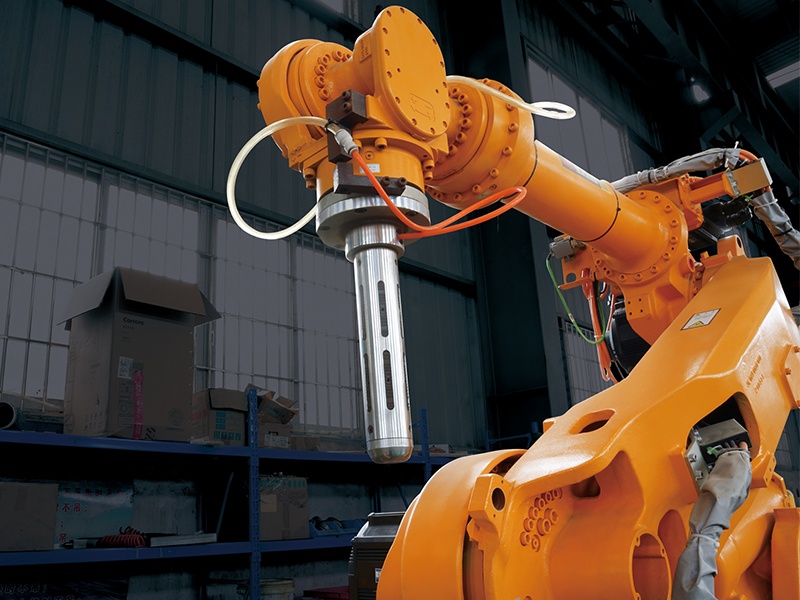
End-Of-Arm Tooling is the part mounted at the end of a palletizing robot arm. Its role is to grip, support, lift, move, and release products safely onto a pallet or designated stacking area. In Palletizing, the robot arm provides movement, but the tooling decides whether the product can be handled accurately without slipping, squeezing, tilting, or damaging the package.
The importance of automated palletizing is growing as factories invest more in industrial robots. The International Federation of Robotics reported about 542,000 industrial robot installations in 2024, with global operational stock reaching about 4.66 million units. This shows why end-of-line automation is becoming a practical direction for manufacturers that want higher efficiency and more stable output.
Main Roles Of End-Of-Arm Tooling
| Role | What It Does | Why It Matters |
|---|---|---|
| Product gripping | Holds cartons, rolls, bags, or packed goods | Prevents dropping and shifting |
| Load support | Keeps the product stable during movement | Reduces deformation and damage |
| Accurate placement | Releases products in the right position | Improves pallet pattern consistency |
| Speed matching | Works with conveyor and robot cycle time | Supports continuous production flow |
| Product protection | Controls pressure and contact surface | Reduces dents, scratches, and package failure |
| Format flexibility | Adapts to product size or packing style | Supports more product specifications |
Why Tooling Design Affects Palletizing Quality
Poor End-Of-Arm Tooling can create problems even when the robot itself is accurate. If the gripper is too weak, products may slip during transfer. If the gripping force is too strong, cartons, film rolls, or packaged products may deform. If the release position is unstable, pallet layers may become uneven and create transport risks.
JINGWEI’s palletizing solution is designed to identify finished product information, carry products, and place them in designated areas, helping reduce labor intensity and manual handling errors. This makes the end gripper mechanism a key part of the whole palletizing process, especially when finished products must move from inspection, rewinding, Slitting, or packing areas into organized storage or shipment flow.
How Buyers Should Evaluate Tooling
Before choosing a palletizing system, buyers should not only ask about robot payload and speed. They should also confirm product size, weight, surface material, package strength, stacking pattern, line speed, pallet size, and future product changes. For film machinery factories, different finished goods may require different gripping methods, such as clamp tooling, vacuum tooling, fork-type support, or customized combined tooling.
JINGWEI’s automated palletizing equipment is described as a system composed of the main robot arm, end gripper mechanism, conveyor line interface module, intelligent sensor system, servo drive mechanism, electronic control system, and human-machine interface. This shows that palletizing performance depends on full-system engineering, not only one robot component.
JINGWEI’s Integrated Engineering Support
JINGWEI provides integrated film processing equipment covering film casting, Printing, lamination, slitting, inspection rewinding, winding upgrades, and palletizing automation. This process understanding helps our team design palletizing solutions that match upstream production, finished product flow, and factory layout more closely.
For project planning, buyers should provide finished product dimensions, package type, weight range, output speed, pallet pattern, workshop layout, and automation target. Share your production line details with JINGWEI, and our team can recommend a practical End-Of-Arm Tooling and palletizing solution for stable operation.
Previous: What Is Palletizing in Manufacturing