


Why Is Palletizing Automation Important
It Turns The End Of The Line Into A Stable Process
Palletizing Automation is important because it helps factories stack finished products in a consistent pattern with less manual handling. In manufacturing, the last step often decides whether products can move smoothly into storage, wrapping, loading, and shipment. If palletizing depends too much on manual labor, output may slow down when product weight, shift length, or order volume increases.
Global industrial robot adoption also shows this direction clearly. The International Federation of Robotics reported about 542,000 industrial robot installations in 2024, with global operational robot stock reaching about 4.66 million units. This reflects a wider shift toward automated handling, end-of-line efficiency, and more predictable factory operation.
Key Benefits Of Palletizing Automation
| Benefit | What It Improves | Why It Matters |
|---|---|---|
| Labor efficiency | Reduces repeated lifting and stacking | Helps workers focus on higher-value tasks |
| Stacking consistency | Keeps pallet patterns more uniform | Reduces shifting during storage and transport |
| Production flow | Connects packing, conveying, and warehousing | Makes the end-of-line process smoother |
| Product protection | Uses controlled movement and gripping | Reduces package dents, drops, and deformation |
| Output stability | Repeats the same action across shifts | Supports large orders and continuous production |
| Data visibility | Works with sensors and control systems | Helps monitor line status and handling rhythm |
Why It Matters For Film Manufacturing Lines
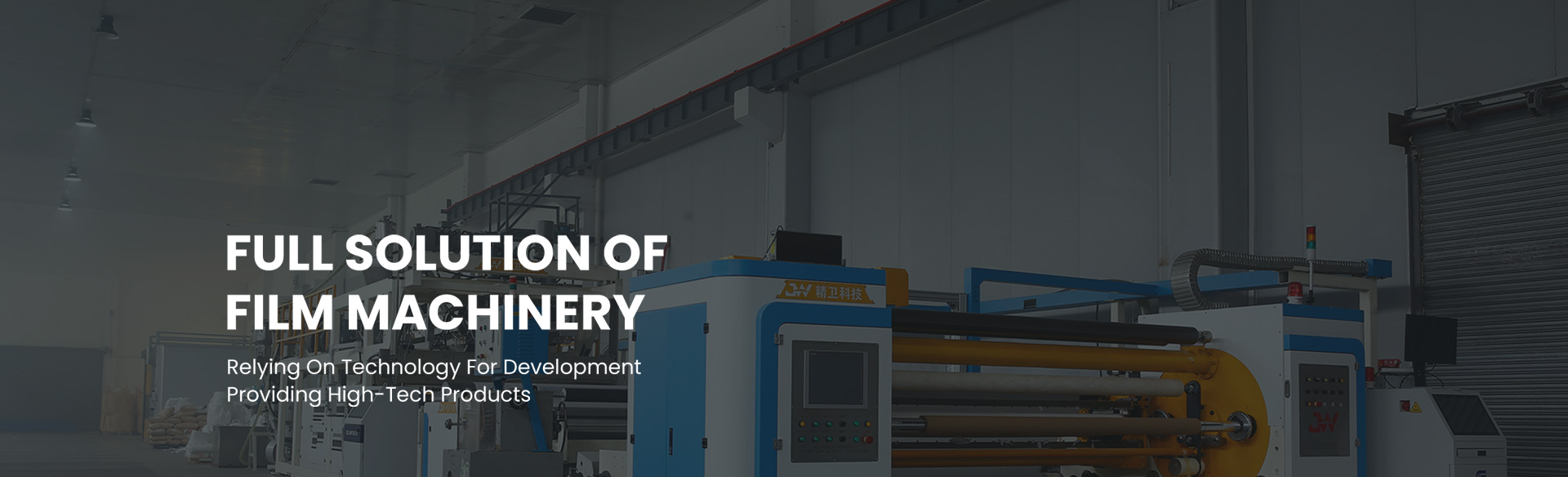
For film production, finished goods may include rolls, cartons, packed materials, or semi-finished products from casting, slitting, rewinding, inspection, lamination, and packing processes. If these products are not stacked correctly, the warehouse can become disorganized and shipment preparation may take more time.
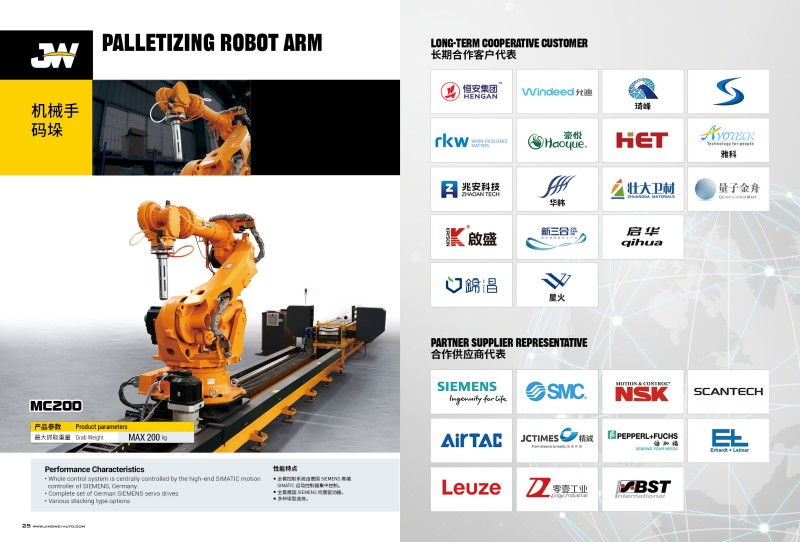
JINGWEI’s automated palletizing equipment is described as a system composed of the main robot arm, end gripper mechanism, conveyor line interface module, intelligent sensor system, servo drive mechanism, electronic control system, and human-machine interface. This shows that palletizing is not only a robot arm, but a complete engineering system connected with the whole production line.
Professional Advice For Project Planning
Before choosing Palletizing Automation, buyers should confirm product size, weight, package strength, output speed, pallet size, stacking pattern, conveyor height, workshop layout, and future product changes. The end gripper should match the actual finished product, while the control system should match upstream equipment and warehouse flow.
JINGWEI provides integrated film machinery solutions covering cast film production lines, slitting machines, inspection and rewinding machines, lamination equipment, winding systems, and palletizing robot arms. This process understanding helps our team design palletizing solutions that fit real factory operation, rather than treating palletizing as an isolated machine.
Build A More Predictable End-Of-Line System
Palletizing Automation is important because it improves labor efficiency, reduces handling variation, protects finished goods, and helps production lines move toward more continuous operation. For factories planning capacity upgrades, it should be reviewed together with upstream line speed, finished product format, packing method, and shipment workflow.
Share your product specifications, output target, pallet pattern, and factory layout with JINGWEI. Our team can help recommend a practical Palletizing Automation solution for stable production and long-term equipment planning.