


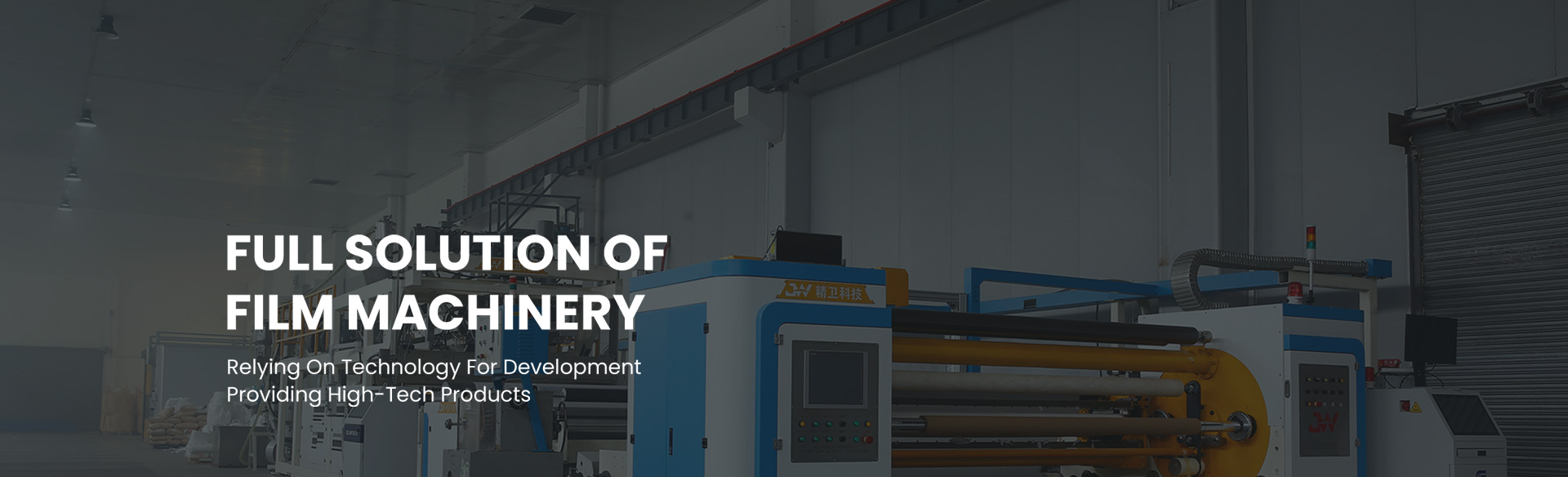
Understanding Productivity Challenges in High-Speed Slitting
High-speed slitter rewinder operations are designed to maximize output, but increased speed also amplifies risks related to tension instability, slitting accuracy, roll defects, and unplanned downtime. Productivity is not determined by line speed alone. It depends on how well the entire system maintains stability, consistency, and repeatability over long production runs.
From an equipment manufacturing perspective, our company approaches high-speed productivity as a balance between speed, control, and reliability, ensuring that increased output does not compromise finished roll quality.
Optimize Tension Control for High-Speed Stability
Use Speed-Responsive Tension Control
At high operating speeds, tension fluctuations become more pronounced during acceleration, deceleration, and diameter changes. Static or slow-response tension systems often fail to maintain stability.
Our company designs tension control systems with fast response and diameter-based compensation to maintain consistent web force throughout the entire speed range.
Apply Proper Tension Zoning
Wide webs require balanced tension across the full width. Without proper zoning, edge slack or center over-tension can reduce effective operating speed.
Our company configures tension zoning strategies that stabilize the web structure, enabling higher sustained speeds without roll quality issues.
Improve Slitting Accuracy to Reduce Speed-Related Defects
Maintain Blade Stability at High Speeds
Blade vibration and deflection increase with speed, leading to inconsistent slit widths and poor edge quality.
Our company emphasizes rigid knife holders, precise shaft alignment, and stable mounting structures to ensure cutting accuracy even at elevated line speeds.
Match Slitting Method to Material Behavior
Not all materials tolerate the same slitting method at high speed. Thin films may perform well with razor slitting, while thicker materials require shear slitting for edge stability.
Our company evaluates material properties and production targets to select slitting configurations that support both speed and quality.
Enhance Web Guiding Performance
Place Web Guiding Near Critical Zones
At high speeds, even minor lateral deviations can quickly result in off-spec rolls. Effective web guiding must act before deviations reach the slitting or rewinding sections.
Our company integrates responsive web guiding systems close to the unwinding and slitting zones to stabilize material tracking early.
Ensure Fast and Stable Guiding Response
Overcorrection or delayed response can cause oscillation, limiting usable speed.
Our company optimizes sensor sensitivity and actuator response to maintain smooth, accurate web correction during continuous high-speed operation.
Optimize Rewinding Configuration for Speed and Roll Quality
Select the Right Rewinding Method
Center rewinding supports higher speeds but requires precise torque control. Surface rewinding improves roll density control but may limit top speed.
Our company configures rewinding methods based on material stiffness, roll diameter targets, and speed requirements to achieve the best productivity balance.
Apply Diameter-Based Winding Control
As roll diameter increases, torque demand and winding dynamics change rapidly at high speeds.
Our company applies real-time diameter calculation and adaptive control to maintain uniform roll hardness without reducing line speed.
Reduce Changeover Time and Downtime
Use Quick-Adjustment Mechanical Design
Long setup and adjustment times directly reduce productivity, regardless of maximum line speed.
Our company designs slitter rewinder machines with modular knife positioning, fast shaft exchange, and simplified adjustment mechanisms to minimize downtime between jobs.
Stabilize Startup and Ramp-Up Phases
Many quality issues occur during startup rather than steady-state operation.
Our company designs smooth acceleration profiles and coordinated drive control to reduce waste and reach target speed faster.
Maintain Mechanical Precision for Long-Term Speed Performance
Prevent Vibration and Wear
Mechanical wear and frame vibration limit stable operating speed over time.
Our company uses rigid machine frames, precision-machined components, and stable bearing structures to maintain long-term accuracy under continuous high-speed operation.
Ensure Consistent Core Holding and Shaft Stability
Core slippage or shaft deflection can cause roll defects that force speed reduction.
Our company designs high-rigidity winding shafts and reliable core locking systems to support high-speed roll formation.
Use Process Data to Sustain Productivity
Monitor Key Operating Parameters
High-speed productivity is best maintained when deviations are detected early.
Our company designs control systems that monitor tension, speed synchronization, and winding torque, helping operators maintain optimal conditions.
Standardize Operating Procedures
Inconsistent operator practices often limit achievable speed.
Our company supports standardized setup logic and stable default parameter ranges to reduce dependency on manual adjustment.
Conclusion
Productivity in high-speed slitter rewinder operations depends on more than maximum line speed. Stable tension control, accurate slitting, effective web guiding, optimized rewinding configuration, and reliable mechanical design all contribute to sustained high-output performance. By focusing on system coordination, fast response control, and application-oriented machine design, our company provides slitter rewinder solutions that help manufacturers achieve higher productivity with consistent quality, reduced waste, and long-term operational stability in overseas industrial applications.