


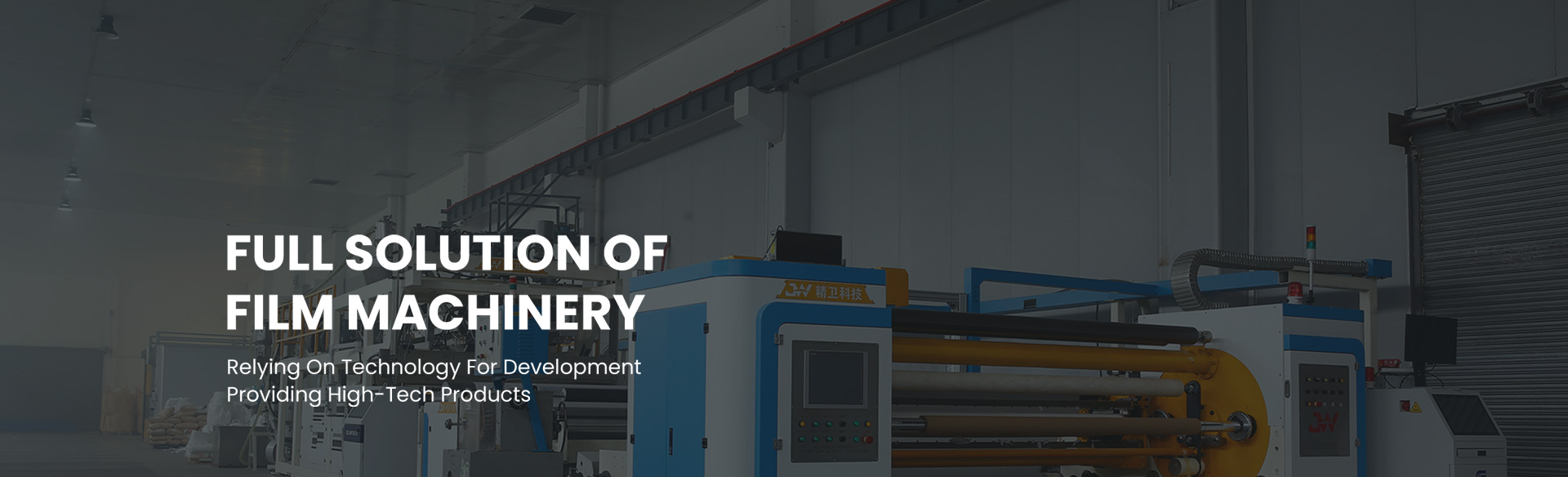
What Does A Coil Slitting Machine Do
Understanding the Role of a Coil slitting machine
A coil Slitting machine is an industrial cutting and rewinding system designed to convert wide rolls of material into narrower, precisely cut strips. It is a core piece of equipment in film production, hygiene materials, flexible packaging, Printing, laminating, and composite-material processing. Companies such as Jingwei — which supplies high-precision, automated slitting and rewinding lines — rely on these machines to complete the downstream finishing stage of film and sheet production.
How a Coil Slitting Machine Works
1. Unwinding the Master Roll
A large coil or master roll is loaded onto the unwinding unit.
The machine keeps constant tension to prevent wrinkles, stretching, or misalignment.
2. Precision Cutting Into Narrow Strips
The material passes through slitting blades, which can include:
Razor blades (for thin films)
Shear blades (for thicker or laminated films)
Crush blades (for paper, foam, or nonwoven materials)
The knives cut the material into multiple narrower strips with clean, accurate edges.
3. Rewinding the Slit Material Into New Rolls
After cutting, each narrow strip is rewound onto individual cores.
The rewinding unit maintains uniform tension, ensuring roll consistency.
These finished rolls are then ready for packaging, laminating, printing, or further processing.
What Materials Can a Coil Slitting Machine Process?
A modern slitting machine handles a wide range of materials:
PE cast film
Breathable microporous film
Laminated packaging film
Printed film
Nonwoven substrates
Paper and coated paper
Composite industrial films
Aluminum foil and specialty laminates
Jingwei’s equipment is specifically engineered for hygiene materials, flexible packaging films, and high-speed line integration.
Key Functions and Benefits
Precise Width Cutting
Ensures consistent roll widths that meet product specifications.
Edge Quality Control
Creates smooth edges that prevent tearing, wrinkling, or production issues in downstream processes.
High-Speed Productivity
Fully automatic slitting machines can process thousands of meters per minute, matching modern production line output.
Uniform Rewinding
Stable rewinding tension prevents loose or over-tight rolls, improving storage and machine-run performance.
Supports Further Manufacturing Stages
Finished narrow rolls are essential for:
Diaper and sanitary-product materials
Food and medical packaging
Printing and laminating lines
Industrial process applications
Why Slitting Machines Are Critical in Film & Packaging Production
Without slitting machines, large film rolls from casting or blown-film lines cannot be processed into usable widths. A 2–3 meter wide film roll must be cut into 3–10 cm strips (or other widths) for hygiene products, packaging pouches, or printing processes.
Slitting machines ensure:
Dimensional accuracy
Clean edges
Roll consistency
Compatibility with high-speed downstream equipment
Improved production efficiency
This finishing stage is essential for maintaining the quality and usability of the final material.
How Jingwei Adds Value
Jingwei integrates advanced features such as:
Servo-driven tension control
Automatic blade positioning
MES digital production monitoring
Remote troubleshooting and smart diagnostics
High-speed rewinding with uniform roll density
These technologies support the demands of modern hygiene-film factories, flexible packaging plants, and large-capacity extrusion lines.
Final Summary
A coil slitting machine takes a wide master roll and converts it into multiple narrow rolls through precise cutting and controlled rewinding. It is essential for the production of films, laminates, nonwovens, and packaging materials. With stable performance, automated control, and high-speed capability, slitting machines ensure consistent product quality and efficient downstream processing — making them a critical component in any modern film-manufacturing environment.