


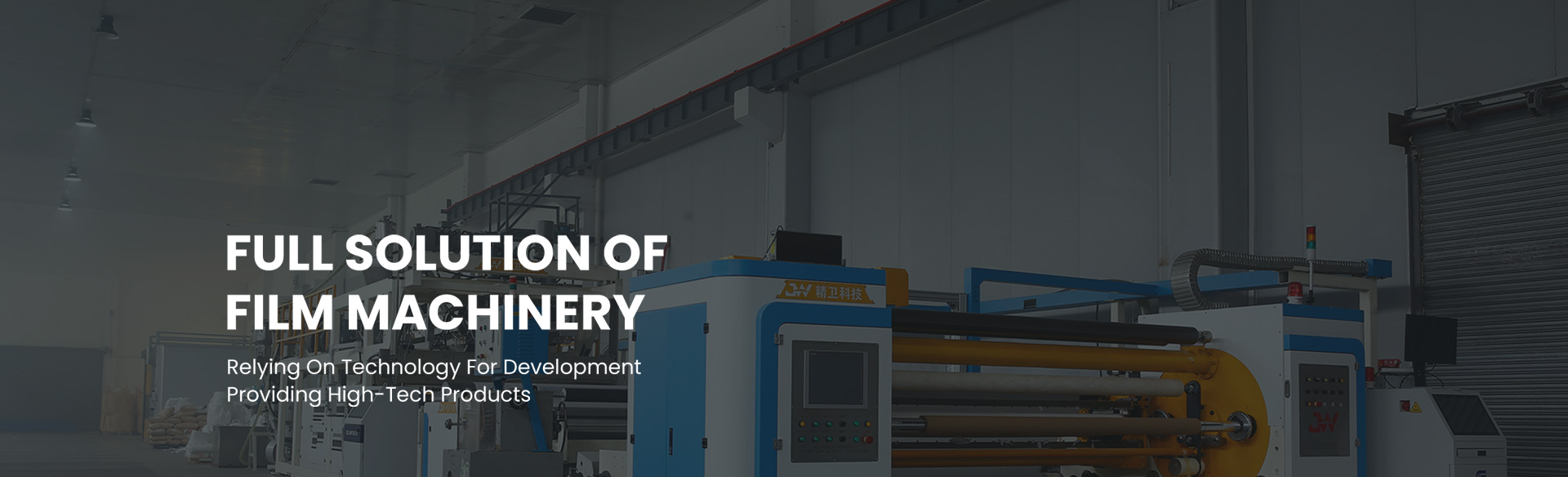
What Are The Types Of Coil Slitting Machines
Coil slitting machines are essential equipment used to convert wide coils of film, paper, foil, nonwoven, or composite materials into narrower, precisely cut rolls. These machines support packaging, hygiene materials, Printing, laminating, and multiple downstream processes. For manufacturers like Jingwei — whose product range includes high-precision Slitting and rewinding lines — having the right slitting configuration ensures clean edges, stable tension, and high-speed efficiency.
Below are the major types of coil slitting machines commonly used in industrial production.
1. Manual Slitting Machines
These are entry-level slitting units used when production volume is small and adjustments are manually controlled.
Key Characteristics
Basic tension system
Manual blade positioning
Lower speeds compared to automated lines
Suitable for small workshops or low-volume custom orders
Ideal For
Light-duty materials, small production batches, or facilities upgrading gradually toward automation.
2. Semi-automatic slitting machines
These machines include motorized unwinding, automatic tension control, and easier blade adjustments.
Key Characteristics
Improved cutting precision
Higher speed stability
Pneumatic blade systems may be included
Suitable for medium-volume production
Ideal For
Manufacturers producing hygiene films, PE packaging film, or laminated materials that require consistent quality but not fully automated operation.
3. Fully Automatic Slitting Machines
These represent the highest level of automation and are widely used in modern film-production plants.
Key Characteristics
Automated shaft loading and unloading
Servo-driven tension control
High-precision slitting with minimal deviation
Automatic edge trimming and defect detection
Remote diagnostics and digital control systems
Ideal For
Large-scale film producers, high-speed PE casting lines, breathable film production, and flexible packaging converters — sectors served by Jingwei’s smart slitting solutions.
4. Razor Slitting Machines
Designed for thin and delicate materials where clean cuts are essential.
Key Characteristics
Razor blades positioned under tension
Very fine cutting accuracy
Suitable for extremely thin films
Ideal For
Breathable films, stretch films, and sanitary-grade PE films — materials commonly processed in hygiene-product manufacturing.
5. Shear Slitting Machines
A widely used slitting method where rotating “male” and “female” knives cut the material like scissors.
Key Characteristics
Clean edges
Versatile across many material types
Ideal for thicker films, laminates, and coated materials
Ideal For
Composite films, laminated structures, and packaging rolls produced on extrusion or lamination lines.
6. Score (Crush) Slitting Machines
Designed for medium to thick, nonwoven, and paper-based materials.
Key Characteristics
A rotating blade presses the material against a hardened anvil
Simple and durable system
Works well on tough materials
Ideal For
Nonwoven hygiene substrates, coated paper, foam-based rolls, and sheet-type composites.
7. Duplex Slitter Rewinders
These machines slit and rewind material onto two separate shafts simultaneously.
Key Characteristics
High productivity
Excellent for narrow-width rolls
Commonly used in flexible packaging
Ideal For
High-volume production where consistent roll tension and fast cycle time are required.
8. Turret Slitter Rewinders
A turret system rotates new cores into position while finished rolls are removed automatically.
Key Characteristics
Continuous slitting capability
Minimal downtime
High-speed production
Ideal For
Factories that require uninterrupted output, such as packaging-film producers and hygiene-film lines.
How Jingwei’s Technology Fits These Machine Types
Jingwei supplies high-speed, high-precision slitting and rewinding equipment designed for:
Breathable microporous film
PE cast film
Laminated packaging film
Printed film
Hygiene and medical substrate rolls
Flexible packaging and industrial materials
Their machines integrate MES digital control, servo-driven tension management, fast blade systems, and remote diagnostics — enabling stable, efficient slitting in large-scale factories.
Final Summary
Coil slitting machines come in various types — manual, semi-automatic, fully automatic, shear, razor, crush, duplex, and turret systems. The ideal machine depends on material type, required precision, production scale, and automation goals. For international manufacturers seeking advanced, stable, and efficient slitting solutions, companies like Jingwei offer integrated, high-performance systems that support modern smart-factory environments.
If you want, I can also write:
“How to Choose the Best Coil Slitting Machine”
“Common Problems in Slitting Lines and How to Solve Them”
“What Affects Slitting Precision in Film Production?”