


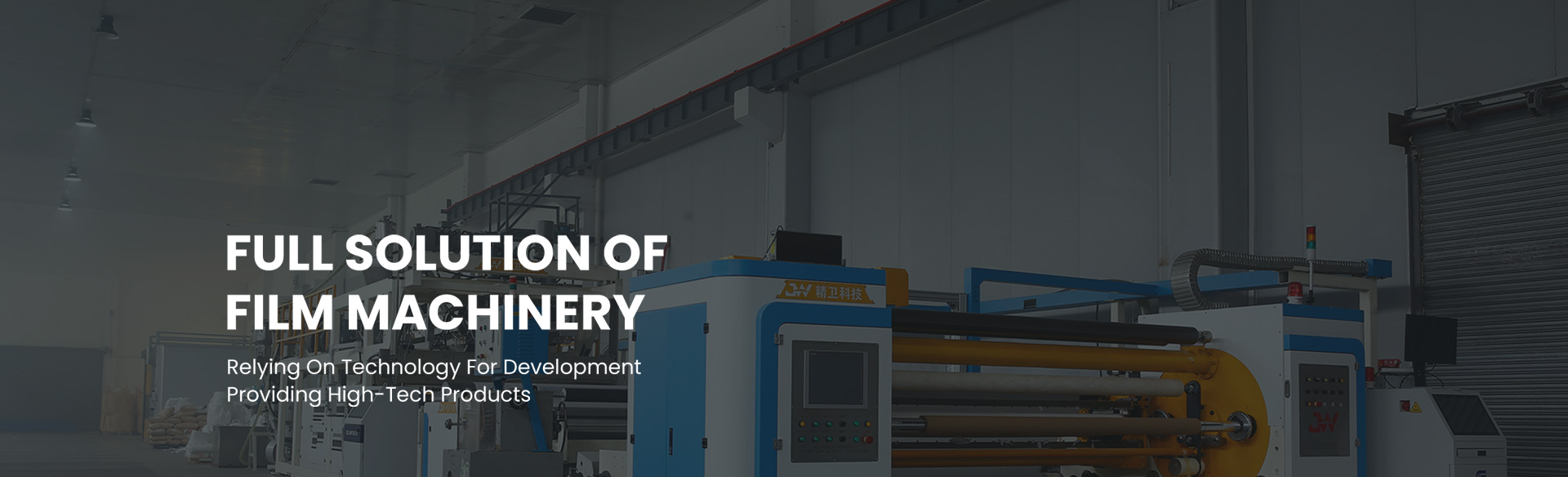
Which Production Line Is Better for Diaper Film Manufacturing?
A breathable film production line with casting, laminating, and inspection capabilities is generally preferred for diaper Film Manufacturing because it provides better control over softness, breathability, and quality consistency.
What Production Line Is Used for Diaper Film Manufacturing?
Diaper film manufacturing requires specialized production lines designed to create functional materials with both waterproof and breathable properties.
A typical diaper film production line may include:
Extrusion system
Stretching or microporous forming system
Laminating machine
Slitting machine
Inspection rewinding machine
These systems work together to produce breathable backsheet films used in baby diapers and other hygiene products.
Unlike general plastic film production, diaper film manufacturing requires precise control of:
Moisture vapor transmission
Liquid resistance
Film softness
Thickness uniformity
Mechanical strength
From a film machinery manufacturing perspective, the best production line is not simply the one with the highest speed, but the one that can maintain stable film performance during long-term production.
Why Is Breathable Film Casting Technology Commonly Used for Diaper Films?
Casting Process Improves Film Uniformity
breathable film casting machines are widely used in diaper film production because they provide accurate control over film thickness and surface quality.
The production process typically includes:
Polymer material preparation
Extrusion
Film casting
Cooling and forming
Stretching to create breathable micropores
Winding into finished rolls
Casting technology helps manufacturers achieve:
Uniform film thickness
Stable breathable performance
Better surface appearance
Consistent production quality
For diaper manufacturers, stable breathable performance is essential because the backsheet film must allow moisture vapor to escape while preventing liquid leakage.
What Role Does Lamination Play in Diaper Film Production?
Multi-Layer Structures Improve Product Performance
Many diaper films are not single-layer materials. They often combine breathable films with nonwoven materials to improve comfort and Functionality.
A laminating machine helps combine different layers to achieve:
Softer touch
Better strength
Improved comfort
Enhanced product structure
A typical diaper material structure may include:
Breathable PE film layer
Adhesive layer
Nonwoven fabric layer
The lamination process must maintain strong bonding while preserving the softness and flexibility required for hygiene products.
Why Is Quality Inspection Important in Diaper Film Manufacturing?
Defect Control Protects Final Product Quality
Diaper materials require strict quality standards because even small film defects can affect final product performance.
Inspection rewinding machines help manufacturers identify:
Film surface defects
Thickness variation
Contamination
Material damage
Production inconsistencies
Online inspection and automatic rewinding systems improve quality control by detecting problems during production instead of after delivery.
Diaper Film Production Line vs General Film Production Line: Key Comparison
| Comparison Factor | Diaper Film Production Line | General Film Production Line |
|---|---|---|
| Main Application | Hygiene products | General plastic films |
| Film Requirement | Breathability and softness | General film properties |
| Thickness Control | High precision required | Depends on application |
| Quality Standard | Very strict | Varies by product |
| Main Equipment | Casting, lamination, inspection | Extrusion, winding, processing |
| Production Focus | Comfort and safety | Cost and versatility |
Which Equipment Combination Is Better for Diaper Film Manufacturing?
Integrated Production Provides Better Control
A complete diaper film production solution usually combines multiple processes.
A recommended production flow includes:
Breathable film extrusion and casting
Film stretching or pore formation
Surface treatment if required
Lamination with nonwoven materials
Slitting
Inspection and rewinding
Integrating these processes helps manufacturers achieve:
Better production coordination
Reduced material waste
More stable quality
Improved manufacturing efficiency
For large-scale hygiene material suppliers, complete production solutions usually provide stronger long-term advantages.
Can Blown Film Lines Produce Diaper Films?
Blown Film Technology Has Different Advantages
Blown film machines can also produce PE films used in some hygiene applications.
Advantages include:
Flexible film production
Multi-layer capability
Wide material compatibility
Lower equipment complexity for certain products
However, high-performance breathable diaper films often require precise control of film structure and consistency.
For manufacturers focusing on large-volume diaper film production, casting technology is commonly selected because of its stronger thickness control and uniformity.
What Factors Should Manufacturers Consider Before Choosing a Diaper Film Production Line?
Product Requirements Determine Equipment Selection
Important factors include:
Required breathability level
Film thickness range
Production capacity
Material formulation
Lamination requirements
Quality standards
Automation level
Manufacturers should evaluate the complete production process instead of selecting a machine based only on output speed.
A production line that matches product requirements can provide better efficiency and long-term production stability.
How Does Jingwei Support Diaper Film Manufacturing Solutions?
As a film machinery manufacturer, Jingwei provides film production solutions for hygiene material applications, including breathable film production, laminating, inspection, and rewinding systems.
With experience in film processing technology, Jingwei helps manufacturers build production lines that meet requirements for quality consistency, efficiency, and stable operation.
Choosing the right diaper film production line allows manufacturers to produce reliable hygiene materials and develop stronger competitiveness in the global market.