


High Speed Slitting Machine vs Standard Slitting Machine: Which Improves Productivity?
In film converting production, slitting efficiency directly affects factory output, material utilization, and delivery capability. When production demand increases, many manufacturers need to decide whether a standard slitting machine is sufficient or whether upgrading to a high speed slitting machine can bring better productivity.
Both machines perform the same basic function of cutting large parent rolls into smaller finished rolls, but they differ significantly in production speed, automation level, precision control, labor requirements, and long-term operating efficiency.
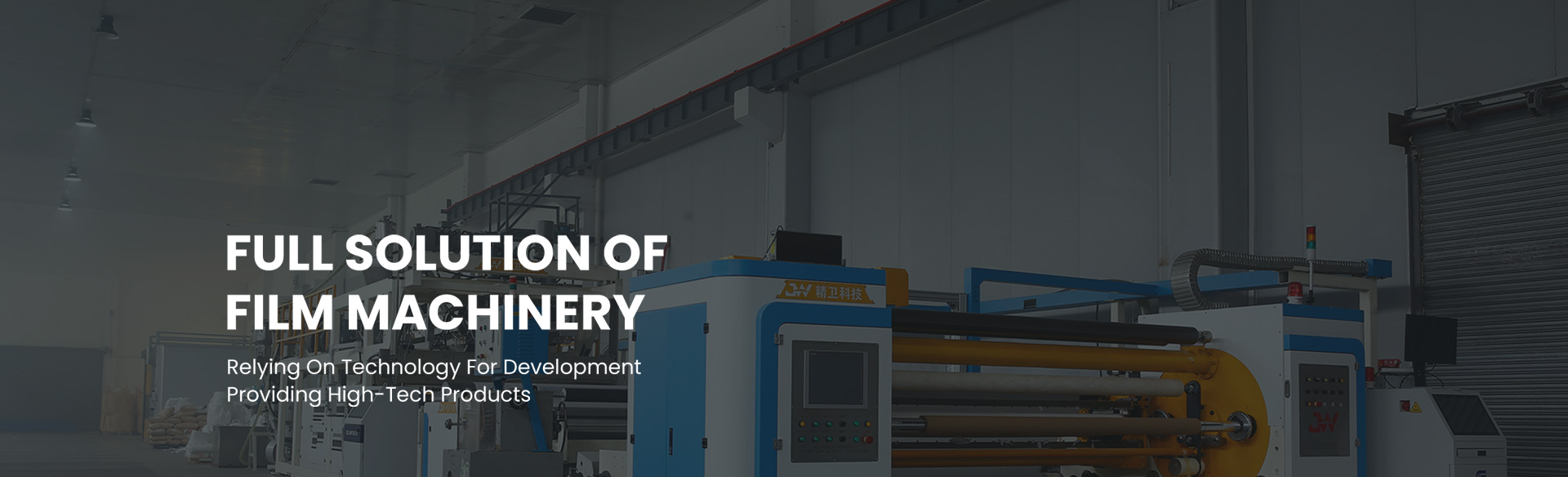
As a professional film machinery manufacturer, JINGWEI develops high-speed slitting solutions for plastic films, nonwoven materials, paper, and composite materials. Its automatic slitting machines integrate servo drive systems, CCD deviation correction, precision cutting units, tension control, and automatic rewinding systems to improve continuous production efficiency. (JINGWEI)
Basic Difference Between High Speed and Standard Slitting Machines
The main difference between a high speed slitting machine and a standard model is production capability.
A standard slitting machine is designed for general roll processing requirements with moderate output.
A high speed slitting machine is designed for industrial production environments where manufacturers require faster processing, stable quality, and reduced downtime.
| Comparison | Standard Slitting Machine | High Speed Slitting Machine |
|---|---|---|
| Production speed | Medium | High |
| Automation level | Basic | Advanced |
| Labor requirement | Higher | Lower |
| Tension control | Standard | Precision control |
| Production consistency | Moderate | Higher |
| Suitable applications | Small and medium production | Large-scale continuous production |
JINGWEI high speed slitting machines can reach production speeds up to 600m/min depending on configuration, while supporting materials including OPP, BOPP, CPP, PE, PET, PVC, nylon, paper, and nonwoven materials. (JINGWEI)
How Standard Slitting Machines Work
A standard slitting machine usually completes the following steps:
Parent roll loading
Manual or semi-automatic unwinding adjustment
Knife positioning
Material cutting
Roll rewinding
The main advantages include:
Lower equipment investment
Simple operation structure
Easier maintenance
Suitable for basic production requirements
Standard machines are suitable for:
Small batch orders
Product testing
Less demanding film applications
Production with stable specifications
However, when production volume increases, several limitations may appear:
Longer setup time
Higher dependence on operators
Lower production speed
More variation between batches
How High Speed Slitting Machines Improve Productivity
A high speed slitting machine uses automation technology to optimize the complete converting process.
The production process includes:
Automatic roll loading
Intelligent unwinding control
CCD edge correction
Precision knife cutting
Automatic tension adjustment
High-speed rewinding
Finished roll unloading
JINGWEI automatic slitting machines use Siemens motion control systems and servo drive technology to synchronize unwinding, correction, slitting, and rewinding processes. Some models support operating speeds of 600m/min with high-precision control. (JINGWEI)
Productivity Comparison
The biggest advantage of high speed equipment is improved production efficiency.
| Productivity Factor | Standard Slitting Machine | High Speed Slitting Machine |
|---|---|---|
| Running speed | Moderate | Higher |
| Continuous operation | Limited | Strong |
| Roll change efficiency | Average | Improved |
| Operator involvement | Higher | Lower |
| Output per shift | Lower | Higher |
Higher speed does not only mean faster cutting. Productivity improvement also comes from:
Reduced adjustment time
Less production interruption
More stable material movement
Lower waste generation
For industrial film production, these improvements can significantly increase daily output.
Precision and Quality Control Comparison
Film slitting requires accurate control of width, tension, and roll appearance.
| Quality Point | Standard Machine | High Speed Machine |
|---|---|---|
| Width accuracy | Good | Higher precision |
| Edge quality | Depends on adjustment | More stable |
| Tension control | Basic | Closed-loop control |
| Roll consistency | Moderate | Higher |
| Defect monitoring | Limited | Optional online inspection |
JINGWEI high-speed slitting equipment uses CCD correction systems that automatically identify material edges or positioning marks to reduce deviation during high-speed operation. (JINGWEI)
Manufacturing Process and Technology Differences
Standard Slitting Machine Process
Standard machines mainly focus on:
Cutting width adjustment
Basic rewinding
Manual process control
The operator plays an important role in maintaining production quality.
High Speed Slitting Machine Process
High-speed systems focus on intelligent automation:
Automatic tension control
Servo synchronization
Automatic deviation correction
Precision rewinding
Digital parameter management
This allows the machine to maintain stable performance during long continuous production cycles.
Material Compatibility and Application Differences
Both machine types can process various roll materials, but high-speed models are more suitable for demanding applications.
Common materials include:
PE film
BOPP film
CPP film
PET film
PVC film
Nonwoven fabric
Paper materials
High-speed slitting machines are commonly used for:
Hygiene materials
Packaging films
Functional films
Medical packaging materials
Large-volume converting projects
JINGWEI provides multiple slitting solutions covering automatic high-speed slitting machines, differential shaft slitting machines, and film roll slitting rewinding machines for different production requirements. (JINGWEI)
Cost Comparison: Which Creates Better Long-Term Value?
The initial investment between high-speed and standard machines can be different, but total production cost should include labor, efficiency, and material waste.
| Cost Factor | Standard Machine | High Speed Machine |
|---|---|---|
| Equipment cost | Lower | Higher |
| Labor cost | Higher | Lower |
| Production output | Limited | Higher |
| Material waste | More dependent on operators | Reduced |
| Long-term efficiency | Moderate | Better |
For factories with continuous production requirements, high-speed equipment often provides better return through improved productivity.
Quality Control Checkpoints
A reliable slitting process requires strict quality management.
Important checkpoints include:
| Inspection Item | Purpose |
|---|---|
| Knife adjustment | Ensure cutting accuracy |
| Tension monitoring | Prevent wrinkles |
| Edge inspection | Improve roll quality |
| Roll diameter control | Maintain consistency |
| Surface inspection | Detect defects |
Automatic systems allow more real-time monitoring and reduce quality variation caused by manual operation.
Manufacturer vs Trader: Why Engineering Capability Matters
Slitting equipment is closely connected with material characteristics and production processes. Choosing a manufacturer with engineering experience provides more value than purchasing a standard machine only.
A professional manufacturer can provide:
Equipment customization
Material testing support
Process optimization
Installation guidance
Technical service
Production upgrades
JINGWEI focuses on complete film production solutions, including casting film machines, breathable film machines, Printing machines, slitting machines, inspection rewinding machines, laminating machines, and automation systems. (JINGWEI)
OEM and Customized Slitting Solutions
Different industries require different machine configurations.
A customized slitting project usually includes:
Material evaluation
Production requirement analysis
Machine configuration design
Technical confirmation
Manufacturing and testing
Installation commissioning
Customization options include:
Working width
Slitting speed
Knife structure
Tension system
Inspection system
Automatic unloading
Bulk Supply and Project Sourcing Checklist
Before selecting a slitting machine, manufacturers should evaluate:
| Evaluation Item | Key Question |
|---|---|
| Production volume | How many rolls are processed daily? |
| Material type | What materials are being cut? |
| Speed requirement | Is continuous high output needed? |
| Quality standard | What accuracy is required? |
| Automation demand | How much labor reduction is needed? |
| Future expansion | Can the machine be upgraded? |
Export Market Compliance Considerations
For international equipment projects, manufacturers should consider:
Technical documentation
Installation support
Spare parts supply
Remote diagnosis
Long-term service capability
Reliable after-sales support helps ensure stable equipment operation after installation.
Which Slitting Machine Improves Productivity Better?
A standard slitting machine is suitable for manufacturers who need:
Lower investment
Basic roll processing
Small and medium production
A high speed slitting machine is more suitable for manufacturers who need:
Higher production capacity
Lower labor dependence
Better quality consistency
Continuous industrial operation
For large-scale film converting projects, high-speed slitting technology usually provides stronger productivity advantages through automation, precision control, and improved production stability.
JINGWEI provides professional high-speed slitting solutions with advanced automation technology, customized engineering capability, and complete production support. Through efficient converting equipment, JINGWEI helps manufacturers improve productivity and build more competitive film processing systems.