


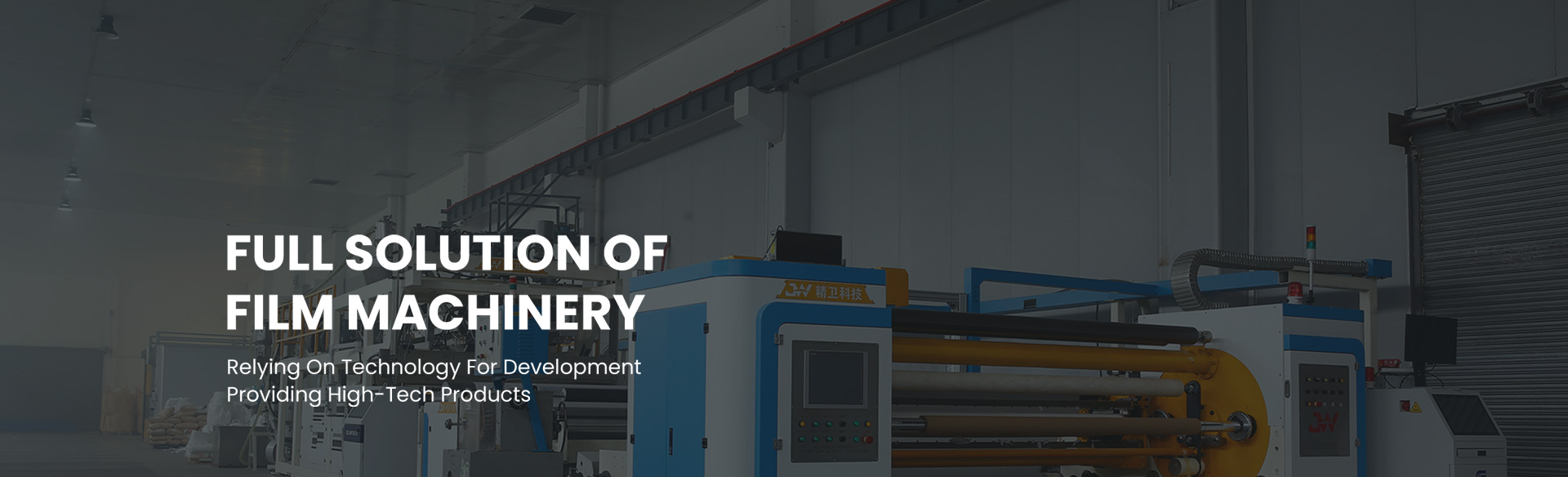
Small Film Casting Machine vs Industrial Production Line: Which Should You Choose?
Choosing the right film production equipment is an important decision for manufacturers because it directly affects production capacity, investment costs, product quality, and future expansion capability.
A small film casting machine and an industrial film production line both use extrusion and casting technology, but they are designed for completely different production goals. A small machine focuses on flexibility and lower investment, while an industrial production line is designed for continuous large-scale manufacturing with higher automation and efficiency.
As a professional film machinery manufacturer, JINGWEI provides complete film production solutions, including Breathable Film Casting Machines, Pe Film Casting Machines, cast film extrusion machines, printing systems, slitting systems, and intelligent production lines. The equipment can be customized according to material requirements, production capacity, and application needs. (JINGWEI)
Basic Difference Between Small Film Casting Machines and Industrial Production Lines
The biggest difference between small and industrial film casting equipment is production scale and automation level.
A small film casting machine is usually designed for testing, research, small-batch production, or manufacturers with limited output requirements.
An industrial film production line is designed for continuous manufacturing with higher speed, larger film width, automatic control systems, and integrated downstream processes.
| Comparison | Small Film Casting Machine | Industrial Production Line |
|---|---|---|
| Production capacity | Low to medium | High-volume production |
| Investment cost | Lower | Higher |
| Automation level | Basic | Advanced |
| Film width | Smaller | Larger |
| Labor requirement | Higher | Lower |
| Expansion capability | Limited | Strong |
JINGWEI industrial cast film production lines integrate extrusion systems, precision die heads, cooling systems, film guiding units, automatic winding devices, and central control platforms to achieve continuous production. (JINGWEI)
When Is a Small Film Casting Machine Suitable?
A small film casting machine is suitable for manufacturers that need flexibility rather than maximum output.
Typical applications include:
Product development
Material testing
Small-batch film production
New product trials
Customized film research
The main advantages include:
Lower Initial Investment
Small equipment requires less capital investment and can help manufacturers test market demand before expanding production.
Easier Operation
Because the structure is simpler, operators can learn the production process faster.
Flexible Production Adjustment
Small machines are easier to adjust when testing:
New materials
Different film thicknesses
New formulations
Special applications
However, small machines may have limitations when production demand increases, including lower output capacity and higher production costs per unit.
Advantages of Industrial Film Production Lines
Industrial film production lines are designed for large-scale manufacturing environments.
The main advantages include:
Higher Production Efficiency
Industrial systems provide:
Higher running speed
Continuous operation
Automatic material feeding
Reduced downtime
Better production consistency
For example, JINGWEI cast film integrated production lines can combine film casting, printing, and slitting processes into one production system. The integrated design reduces intermediate handling and can improve overall production efficiency by more than 30%. (JINGWEI)
Better Automation Capability
Industrial production lines can integrate:
Online thickness measurement
Defect detection systems
MES production management
Automatic winding
Digital monitoring
These functions help manufacturers improve production visibility and reduce manual errors. (JINGWEI)
Manufacturing Process Comparison
Small Film Casting Machine Process
A small production process usually includes:
Material feeding
Extrusion melting
Die forming
Cooling shaping
Thickness adjustment
Film winding
The focus is on basic film formation and process flexibility.
Industrial Film Production Line Process
An industrial production line includes more integrated functions:
Automatic raw material feeding
Precision extrusion
High-accuracy die forming
Cooling and shaping
Online quality inspection
Printing or laminating integration
Automatic slitting
Intelligent winding management
JINGWEI industrial solutions support integrated production from Film Manufacturing to finished roll processing, helping manufacturers improve production efficiency and reduce manual operations. (JINGWEI)
Film Quality and Stability Comparison
Production scale also affects quality control capability.
| Quality Factor | Small Machine | Industrial Line |
|---|---|---|
| Thickness consistency | Good | Excellent |
| Production repeatability | Medium | High |
| Online inspection | Limited | Available |
| Automatic adjustment | Limited | Advanced |
| Batch consistency | Moderate | Strong |
Industrial film production requires stable control of:
Extrusion pressure
Melt temperature
Cooling speed
Film tension
Winding accuracy
For applications such as breathable films and hygiene materials, precise process control is especially important.
Material Compatibility and Application Differences
The choice of equipment should also depend on material requirements.
Common materials include:
PE
PP
TPU
Functional polymer materials
Small Machine Applications
Suitable for:
Material testing
New film development
Small-volume production
Industrial Line Applications
Suitable for:
Hygiene films
Packaging films
Breathable films
Functional films
Large-scale commercial production
JINGWEI breathable film casting machines are designed for high-performance breathable film production and support single-layer, double-layer, and three-layer structures with high-speed operation. (JINGWEI)
Investment and Operating Cost Comparison
The initial purchase cost is only one part of equipment evaluation.
| Cost Factor | Small Machine | Industrial Production Line |
|---|---|---|
| Equipment investment | Lower | Higher |
| Labor cost | Higher per unit | Lower per unit |
| Energy efficiency | Moderate | Better optimized |
| Production cost | Higher for large output | Lower for mass production |
| Maintenance complexity | Lower | Higher |
For manufacturers planning long-term production, industrial equipment often provides better cost efficiency because higher output can reduce the average production cost.
Manufacturer vs Trader: Why Technical Capability Matters
Film machinery is not only equipment but also a complete production solution.
Working with a professional manufacturer provides advantages such as:
Process analysis
Equipment customization
Production optimization
Installation support
Technical training
Long-term service
JINGWEI focuses on film machinery solutions and has more than 16 years of experience in hygiene machinery manufacturing. The company has developed comprehensive film solutions integrating hardware, software, and digital technologies, with ISO9001 certification and multiple patents. (JINGWEI)
OEM and Customized Production Solutions
Different production projects require different equipment configurations.
A customized machinery process usually includes:
Production requirement analysis
Material evaluation
Equipment design
Technical confirmation
Machine manufacturing
Factory testing
Installation commissioning
Customization options include:
Film width
Production speed
Layer structure
Automation level
Printing integration
Slitting configuration
Quality Control Checkpoints
Reliable film production requires strict quality management.
| Quality Control Point | Purpose |
|---|---|
| Raw material inspection | Ensure material stability |
| Temperature control | Maintain extrusion quality |
| Thickness measurement | Improve film consistency |
| Surface inspection | Reduce defects |
| Roll inspection | Ensure finished product quality |
Industrial production lines usually provide more automated inspection options to maintain stable output.
Project Sourcing Checklist Before Choosing Equipment
Before selecting a small machine or industrial production line, manufacturers should evaluate:
| Evaluation Item | Key Question |
|---|---|
| Production volume | How much output is required? |
| Product type | What film will be produced? |
| Material requirement | Which polymers are needed? |
| Quality standard | What performance is expected? |
| Future growth | Will capacity increase later? |
| Automation demand | How much labor reduction is needed? |
Export Market Compliance Considerations
For international equipment projects, manufacturers should consider:
Technical documentation
Installation support
Spare parts supply
Remote diagnosis
Production training
JINGWEI provides digital production solutions and remote diagnosis technology to support stable equipment operation across different markets. (JINGWEI)
Which Solution Should You Choose?
A small film casting machine is suitable when manufacturers need:
Lower investment
Flexible testing
Small-batch production
Product development capability
An industrial film production line is more suitable when manufacturers need:
Large production capacity
Higher automation
Stable quality
Lower long-term production costs
The best choice depends on production goals, application requirements, and future expansion plans.
JINGWEI provides professional film machinery solutions with customized engineering capability, advanced automation systems, and complete production support. From breathable film casting machines to integrated cast film production lines, JINGWEI helps manufacturers build efficient and reliable film production capabilities.