


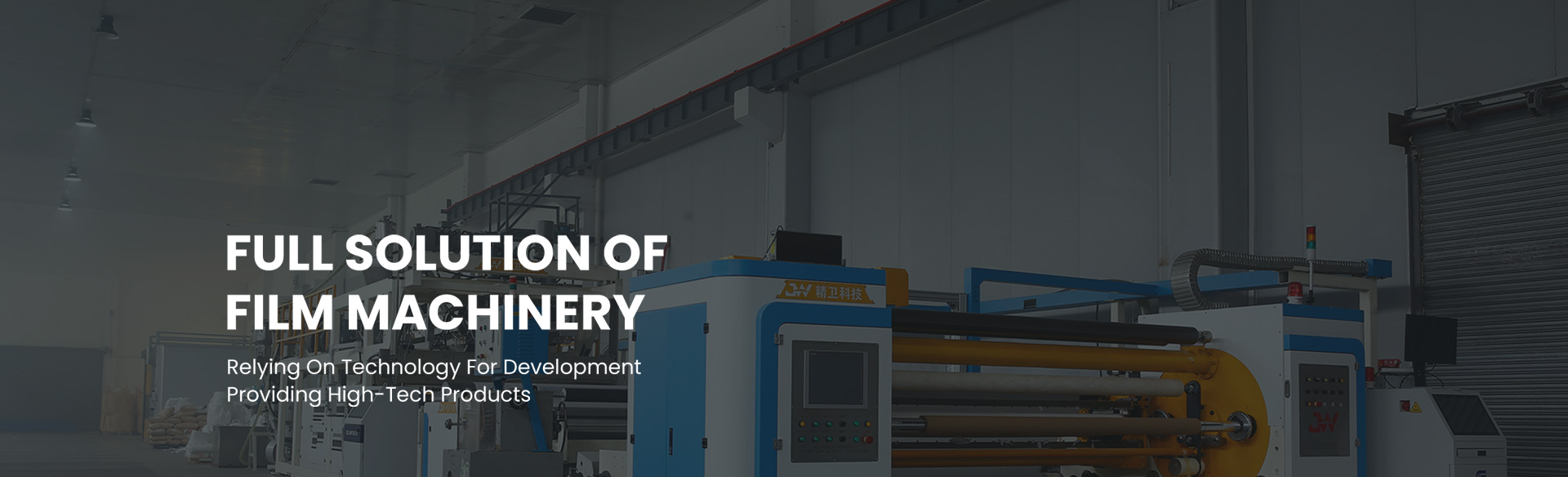
How Does a High Speed Film Casting Machine Compare with a Standard Model?
As film manufacturers continue to improve production efficiency and reduce operating costs, the demand for high speed film casting machines is increasing. However, upgrading from a standard film casting machine to a high speed model is not only about achieving higher output. Production stability, film quality, automation level, energy consumption, and long-term investment value must also be considered.
A high speed film casting machine and a standard model share the same basic casting technology, but they are designed for different production goals. As a professional film machinery manufacturer, JINGWEI provides customized cast film production solutions with advanced extrusion systems, precision control technology, and integrated automation functions. (JINGWEI)
Basic Difference Between High Speed and Standard Film Casting Machines
The main difference between high speed and standard film casting machines is their production capability and process control level.
A standard film casting machine focuses on stable production for general film applications. It is suitable for manufacturers requiring reliable output with moderate production speed.
A high speed film casting machine is designed for large-scale production environments where manufacturers need higher throughput, faster roll changes, and improved production efficiency.
| Comparison | Standard Film Casting Machine | High Speed Film Casting Machine |
|---|---|---|
| Production speed | Moderate | Higher |
| Output capacity | Standard production | Large-scale production |
| Automation level | Basic to advanced | Highly integrated |
| Process control | Stable | More precise |
| Investment cost | Lower | Higher |
| Suitable applications | General films | High-volume production |
JINGWEI cast film production lines integrate extrusion systems, high-precision die heads, cooling roller systems, automatic winding devices, tension control systems, and optional online inspection solutions to support efficient film production. (JINGWEI)
Production Efficiency Comparison
The biggest advantage of a high speed film casting machine is improved production efficiency.
A standard machine may be sufficient for manufacturers producing stable quantities of conventional films. However, when production demand increases, higher speed equipment can help reduce production time and improve factory utilization.
Key efficiency improvements include:
Higher line speed
Reduced manual operation
Faster roll production
Better production continuity
Improved equipment utilization
For example, JINGWEI cast film production lines can integrate film extrusion, Printing, and Slitting processes into one production system, reducing intermediate handling and improving overall efficiency. The company states that integrated production can improve efficiency by more than 30% compared with traditional separate processes. (JINGWEI)
Manufacturing Process Comparison
Although both systems use casting technology, high speed models require more advanced process control.
Standard Film Casting Process
A standard film casting machine usually includes:
Raw material feeding
Extrusion melting
T-die forming
Cooling roller shaping
Thickness adjustment
Film winding
The main focus is maintaining:
Stable film thickness
Smooth surface quality
Reliable operation
High Speed Film Casting Process
A high speed system requires additional control:
Automatic material feeding
High-performance extrusion
Precision melt distribution
High-speed cooling
Online thickness monitoring
Automatic tension control
High-speed winding
At higher production speeds, small variations in temperature, pressure, or tension can affect film quality. Therefore, advanced control systems become increasingly important.
Film Quality Performance Comparison
Increasing production speed does not automatically guarantee better results. The machine must maintain film quality during high-speed operation.
| Quality Factor | Standard Model | High Speed Model |
|---|---|---|
| Thickness consistency | Good | Excellent |
| Surface quality | Stable | High precision control |
| Production speed | Moderate | Higher |
| Tension control | Standard | Advanced |
| Defect monitoring | Optional | More important |
High-speed production requires precise control of:
Extrusion pressure
Die temperature
Cooling conditions
Winding tension
Film thickness
JINGWEI offers optional systems including online automatic thickness measurement, defect detection systems, and digital MES production management to improve production monitoring and traceability. (JINGWEI)
Equipment Structure and Automation Differences
A high speed film casting machine usually includes more automation functions compared with standard models.
| Equipment Feature | Standard Model | High Speed Model |
|---|---|---|
| Automatic feeding | Optional | Common |
| Thickness monitoring | Optional | Integrated |
| Digital production management | Limited | Advanced |
| Automatic winding | Available | High precision |
| Data monitoring | Basic | Real-time |
Automation helps manufacturers reduce labor dependence and improve production consistency.
Modern film production lines increasingly use digital systems to monitor production data, detect abnormalities, and improve manufacturing efficiency. JINGWEI provides digital solutions covering film production processes from raw material processing to finished products. (JINGWEI)
Material Standards and Production Requirements
Material selection directly affects whether a high speed or standard machine is suitable.
Common materials used in film casting include:
PE
PP
TPU
Functional polymer materials
For high speed production, manufacturers need to consider:
Stable material flow
Consistent melt quality
Proper temperature control
Suitable extrusion capacity
A professional machinery manufacturer should evaluate both the material characteristics and production requirements before designing the equipment.
Manufacturer vs Trader: Why Engineering Capability Matters
A high speed film casting machine is a long-term production investment. Choosing a manufacturer with technical experience is more important than simply comparing equipment prices.
A professional manufacturer can provide:
Production line design
Equipment customization
Process optimization
Installation support
Technical training
After-sales service
JINGWEI focuses on complete film machinery solutions, covering cast film machines, breathable film machines, printing machines, slitting machines, inspection systems, rewinding machines, laminating machines, and automation equipment. (JINGWEI)
OEM and Customized Film Machinery Process
Different manufacturers have different production goals. A customized high speed film casting machine project usually includes:
Production requirement analysis
Film application evaluation
Machine configuration design
Technical discussion
Equipment manufacturing
Factory testing
Installation and commissioning
Customization options may include:
Film width
Production speed
Film thickness range
Extrusion capacity
Automation configuration
Downstream equipment integration
Quality Control Checkpoints
High speed production requires stricter quality management.
Important checkpoints include:
| Inspection Point | Purpose |
|---|---|
| Raw material testing | Ensure material stability |
| Extrusion monitoring | Maintain melt consistency |
| Die head inspection | Improve thickness accuracy |
| Film surface inspection | Reduce defects |
| Roll quality inspection | Ensure downstream processing |
Quality control becomes more important as production speed increases because defects can affect larger quantities of finished products in a shorter time.
Bulk Supply and Project Sourcing Checklist
Before upgrading to a high speed film casting machine, manufacturers should evaluate:
| Evaluation Item | Key Question |
|---|---|
| Production demand | Is current capacity sufficient? |
| Film type | What materials will be processed? |
| Quality requirement | What standards must be achieved? |
| Factory space | Can the equipment fit properly? |
| Automation needs | How much labor reduction is required? |
| Future expansion | Can capacity be increased later? |
Which Film Casting Machine Is the Better Choice?
A standard film casting machine is suitable for manufacturers who need:
Stable production
Lower investment
General film applications
Simple operation
A high speed film casting machine is more suitable for manufacturers who need:
Higher output
Better production efficiency
Advanced automation
Large-scale manufacturing capability
The best choice depends on production goals, film requirements, and future development plans.
JINGWEI provides professional film machinery solutions with advanced manufacturing technology, customized engineering capability, and integrated automation systems. Through precise control, reliable production processes, and complete project support, JINGWEI helps manufacturers build efficient and stable film production lines.