


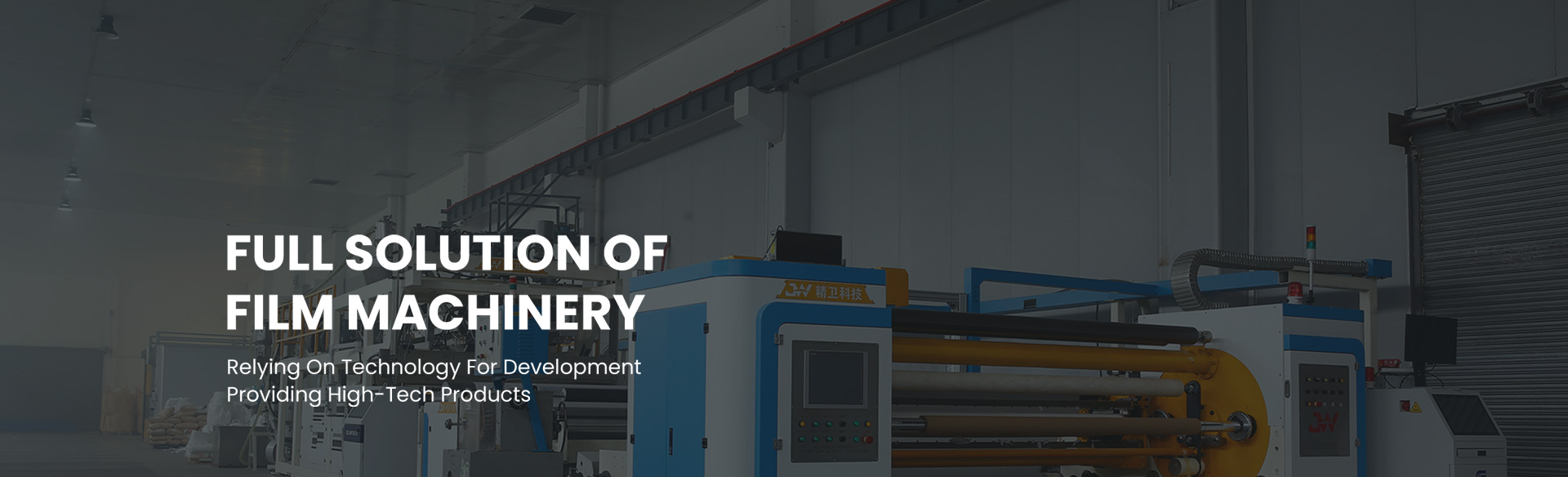
How Does a Breathable Film Casting Machine Compare with a Blown Film Machine?
Selecting the right film production equipment is a key decision for manufacturers entering the flexible film industry. Although both Breathable Film Casting Machines and blown film machines are used to produce polyethylene-based films, they rely on different forming technologies, production processes, and performance characteristics.
The correct choice depends on the target film application, production capacity, material requirements, and expected product quality. As a professional film machinery manufacturer, JINGWEI provides complete film production solutions, including breathable film casting machines, Pe Film Casting Machines, and customized production lines designed for different manufacturing needs.
Basic Difference Between Breathable Film Casting Machine and Blown Film Machine
The main difference between these two technologies is the way molten plastic is formed into film.
A breathable film casting machine uses a flat die casting process. The melted PE material is evenly distributed through a T-die and rapidly cooled on a casting roller. This process provides excellent thickness control and surface quality.
A blown film machine uses an annular die to form a tubular film bubble. Air is introduced into the tube to expand the film, and the bubble is cooled while being pulled upward. This process creates biaxial stretching characteristics and strong mechanical properties.
| Comparison | Breathable Film Casting Machine | Blown Film Machine |
|---|---|---|
| Film forming method | Flat die casting | Circular die blowing |
| Cooling method | Cooling roller | Air cooling ring |
| Film structure | Controlled microporous structure | Tubular stretched structure |
| Thickness control | Higher precision | Good but more affected by bubble stability |
| Main advantage | Uniformity and functional film production | Strength and flexibility |
Different Film Applications and Market Requirements
The biggest factor when comparing these machines is the final film application.
Breathable film casting machines are mainly designed for functional films requiring moisture vapor transmission and waterproof performance.
Typical applications include:
Baby diaper back sheets
Sanitary product films
Medical protective materials
Hygiene packaging materials
Blown film machines are widely used for:
Plastic bags
Packaging films
Agricultural films
Shrink films
Industrial protective films
Blown film technology is especially suitable for applications requiring high tear resistance and mechanical strength because the film is stretched in both machine direction and transverse direction during production.
Manufacturing Process Comparison
Breathable Film Casting Machine Process
A breathable film production line usually includes:
Raw material feeding
Material mixing and extrusion
Melt filtration
T-die film forming
Cooling roller shaping
Stretching treatment
Thickness inspection
Automatic winding
The stretching process is especially important because breathable films require controlled microporous structures. The machine must maintain stable temperature, pressure, and stretching conditions to achieve consistent breathability.
Blown Film Machine Process
The blown film process includes:
Resin feeding
Extrusion melting
Annular die forming
Bubble inflation
Air cooling
Bubble collapsing
Film winding
Because the film is formed through an inflated bubble, operators need to carefully control air pressure, cooling balance, and bubble stability.
Film Performance Comparison
Different production technologies create different film characteristics.
| Performance | Breathable Film Casting Machine | Blown Film Machine |
|---|---|---|
| Thickness uniformity | Excellent | Good |
| Surface smoothness | High | Moderate |
| Transparency | Better | Lower in many applications |
| Mechanical strength | Application dependent | Strong biaxial strength |
| Functional film production | Excellent | Limited |
Cast film technology is known for producing films with excellent clarity and thickness uniformity because the material cools quickly on chilled rollers. Blown film usually provides stronger mechanical properties but may have higher haze due to slower air cooling.
Equipment Investment and Production Efficiency
When choosing between a breathable film casting machine and a blown film machine, investment efficiency should be considered together with production goals.
| Factor | Breathable Film Casting Machine | Blown Film Machine |
|---|---|---|
| Equipment structure | Horizontal production line | Vertical tower structure |
| Space requirement | Larger floor area | Requires higher installation space |
| Automation integration | High | High |
| Production focus | Functional films | General plastic films |
| Technical requirement | Higher process control | Higher bubble control |
For manufacturers producing hygiene materials, breathable film casting equipment can provide better control over film Functionality. For general packaging film production, blown film machines may provide more flexibility.
Material Standards and Processing Requirements
Material selection directly affects machine performance.
Breathable film production usually requires:
PE resin with suitable melt flow characteristics
Functional fillers
Stable material dispersion
Controlled stretching performance
Blown film production commonly uses:
LDPE
LLDPE
HDPE
Multi-layer material combinations
A professional machinery manufacturer should understand the relationship between materials and equipment configuration to ensure stable production results.
JINGWEI provides customized equipment solutions according to different raw materials, film structures, and production requirements.
Quality Control Differences
Quality control requirements vary depending on the final product.
For breathable film production, important checkpoints include:
| Inspection Point | Purpose |
|---|---|
| Film thickness | Ensure uniformity |
| Air permeability | Confirm breathable performance |
| Tensile strength | Maintain mechanical properties |
| Surface inspection | Detect defects |
| Roll quality | Improve downstream processing |
For blown film production, manufacturers usually focus on:
Bubble stability
Film thickness
Tensile strength
Surface quality
Winding consistency
A stable production line requires precise control of every manufacturing stage.
Manufacturer vs Trader: Why Technical Support Matters
Film machinery is a long-term production investment. Choosing a manufacturer instead of a general equipment supplier provides advantages in machine customization, technical support, and production optimization.
A professional manufacturer can provide:
Production line design
Machine configuration recommendations
Installation support
Process adjustment guidance
After-sales service
JINGWEI focuses on complete film machinery solutions and provides customized production equipment based on different applications.
OEM and Customized Film Machinery Process
Different manufacturers have different production targets. A customized machinery process usually includes:
Production requirement analysis
Film application evaluation
Machine configuration design
Technical confirmation
Equipment manufacturing
Factory testing
Installation and commissioning
Customization options may include:
Film width
Production speed
Layer structure
Automation level
Downstream equipment integration
Project Sourcing Checklist Before Investment
Before choosing between a breathable film casting machine and a blown film machine, manufacturers should evaluate:
| Evaluation Item | Key Question |
|---|---|
| Final product | What type of film will be produced? |
| Material | What resin and additives are required? |
| Capacity | What output is expected? |
| Quality standard | What film performance is required? |
| Future expansion | Can the line support upgrades? |
| Technical support | Does the manufacturer provide service? |
Which Machine Should You Choose?
A breathable film casting machine and a blown film machine are not direct replacements for each other. The best choice depends on the target application and production strategy.
A breathable film casting machine is more suitable for manufacturers producing functional hygiene and medical films that require controlled breathability and uniform quality.
A blown film machine is more suitable for manufacturers focusing on flexible packaging, bags, agricultural films, and applications requiring strong mechanical performance.
JINGWEI provides professional film machinery solutions with advanced manufacturing technology, customized equipment design, and complete project support. Through reliable production systems and quality control processes, JINGWEI helps manufacturers build efficient and stable film production capabilities.
https://www.jingweimachinery.com/breathable-film-casting-machine/breathable-film-casting-machine/