


How To Evaluate Palletizing Robot Manufacturers
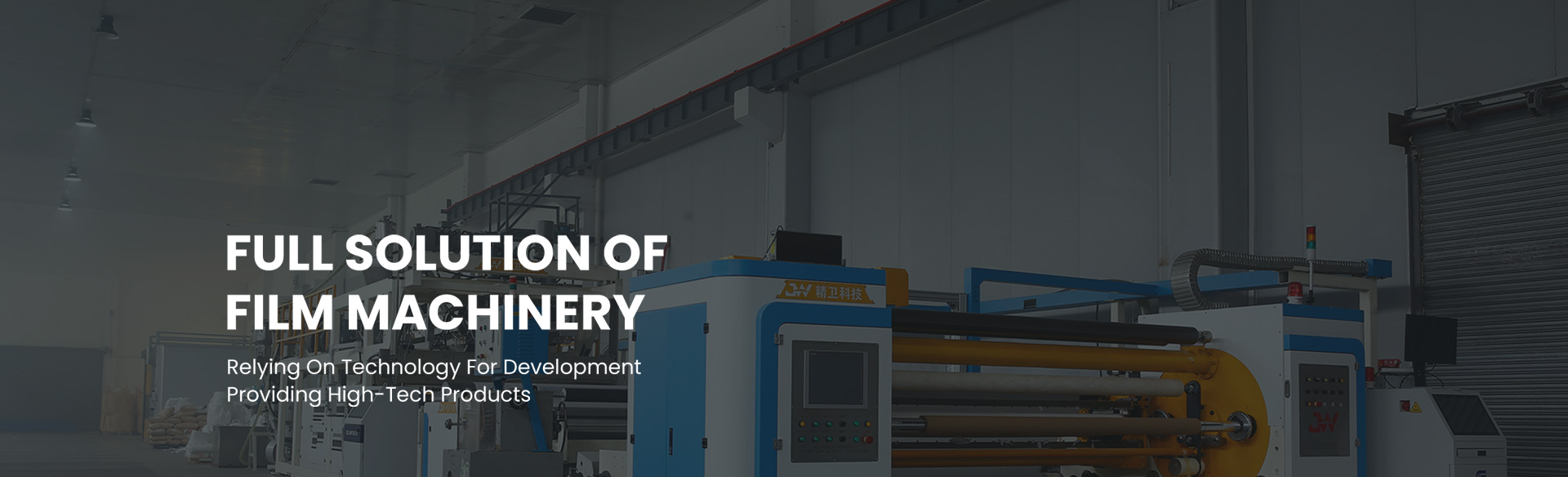
Choosing a palletizing robot manufacturer is not only about payload, speed, or quotation. The real question is whether the supplier can deliver stable engineering, repeatable quality, reliable integration, and long-term service support. In automated packaging and film converting projects, palletizing robots influence line rhythm, stacking accuracy, labor efficiency, and shipment consistency. JINGWEI presents palletizing automation as part of a wider integrated equipment portfolio that includes film casting machines, slitting and inspection rewinding machines, Printing equipment, lamination systems, silicone coating machines, winding upgrades, and palletizing automation. That broader process view is valuable because robot performance is strongest when the end-of-line system matches the upstream production flow.
Manufacturer vs trader should be checked first
A manufacturer and a trader can look similar in a quotation sheet, but their capabilities are very different once a project enters commissioning and after-sales support. A trader may mainly coordinate sourcing and delivery. A manufacturer is more likely to control robot structure, gripper design, conveyor interface, sensor logic, servo matching, and electrical integration. JINGWEI’s automated palletizing equipment is described as a system made up of the main robot arm, end gripper mechanism, conveyor line interface module, intelligent sensor system, servo drive mechanism, electronic control system, and human-machine interface, which shows direct involvement in engineering and system design.
Manufacturing process overview reveals real capability
A reliable evaluation should include the full manufacturing process overview, not only product photos or parameter lists. Buyers should review how the robot is matched to bag, carton, or bundle dimensions, how materials move from conveyor to pallet, what stacking pattern is required, and how the finished pallet will be transferred to storage or shipment. If the supplier cannot explain this workflow clearly, there is a higher risk of poor line matching and unstable operation. JINGWEI’s site positions its solutions around integrated film processing and downstream automation, which supports projects that need connected production rather than a stand-alone robot.
OEM and ODM process should be reviewed early
OEM and ODM capability is another important evaluation point. In OEM supply, the base platform may stay the same while voltage, interface language, guarding, pallet size, or branding is adjusted. In ODM projects, the supplier may need to redesign the gripper, stacking logic, conveyor transition, or control interaction with upstream equipment. These changes directly affect project risk, so they should be discussed before order confirmation. A manufacturer with system-level engineering is usually better prepared for such customization than a company that only resells standard equipment. Based on JINGWEI’s broader equipment scope, it is better positioned for coordinated customization across multiple production modules.
Quality control checkpoints should be measurable
A good palletizing robot manufacturer should provide measurable quality control checkpoints. These should include payload verification, repeat positioning performance, gripper stability, sensor response, stacking consistency, communication with conveyors, and electrical cabinet inspection. Safety compliance also matters. ISO 10218-1 specifies requirements for the inherently safe design, risk reduction measures, and information for use of industrial robots. IEC 60204-1 applies to the electrical, electronic, and programmable electronic equipment of machines, including groups of machines working together in a coordinated manner. These are strong reference points when comparing manufacturers that claim industrial-grade quality.
Bulk supply considerations matter beyond the first machine
A supplier may deliver one successful robot and still struggle with repeated supply. That is why bulk supply considerations should be part of the evaluation. Buyers should confirm whether software versions stay consistent, spare parts are interchangeable, gripper assemblies are standardized, and training documents remain unified across shipments. This is especially important for projects with multiple lines or future expansion. A manufacturer with integrated product management and direct technical control is usually more dependable in repeat supply than a trader relying on different upstream sources. JINGWEI’s positioning as an integrated equipment supplier supports this advantage.
Project sourcing checklist for manufacturer evaluation
| Item | What to check |
|---|---|
| Product range | Payload, size range, stacking type |
| Integration ability | Conveyor interface, signal communication, line matching |
| Customization | OEM and ODM support level |
| Quality records | FAT data, inspection reports, acceptance standards |
| Spare parts | Availability and interchangeability |
| Safety compliance | Robot safety and electrical documentation |
| Service support | Installation, training, troubleshooting |
| Export readiness | Technical files and destination market documents |
A checklist like this helps compare manufacturers on engineering depth, not only on quoted price.
Export market compliance should be part of supplier review
Export compliance is another sign of whether the supplier is a real manufacturer with mature process control. For robot systems entering Europe, Regulation EU 2023/1230 replaces the older Machinery Directive framework and becomes fully applicable from January 20, 2027. EN IEC 60204-1 can be used to support CE marking compliance under this regulation. A supplier that understands electrical safety files, risk documentation, and integration records will usually be easier to work with in export projects than one that treats compliance as an afterthought.
Why JINGWEI is worth evaluating for palletizing projects
JINGWEI’s advantage is that palletizing is not presented as an isolated product. It is part of a wider converting and automation ecosystem that includes Film Manufacturing, laminating, slitting, rewinding, inspection, and material handling. For buyers evaluating palletizing robot manufacturers, this means clearer system matching, stronger integration logic, and better long-term responsibility across the project lifecycle. In practical sourcing terms, that usually leads to smoother commissioning and more stable operation after installation.
Conclusion
To evaluate palletizing robot manufacturers properly, buyers should look beyond robot arm specifications. The stronger method is to review manufacturer vs trader capability, OEM and ODM support, bulk supply consistency, project sourcing discipline, quality checkpoints, and export compliance readiness together. A supplier with integrated engineering and wider production-line understanding will usually deliver better long-term value than one focused only on equipment resale.