


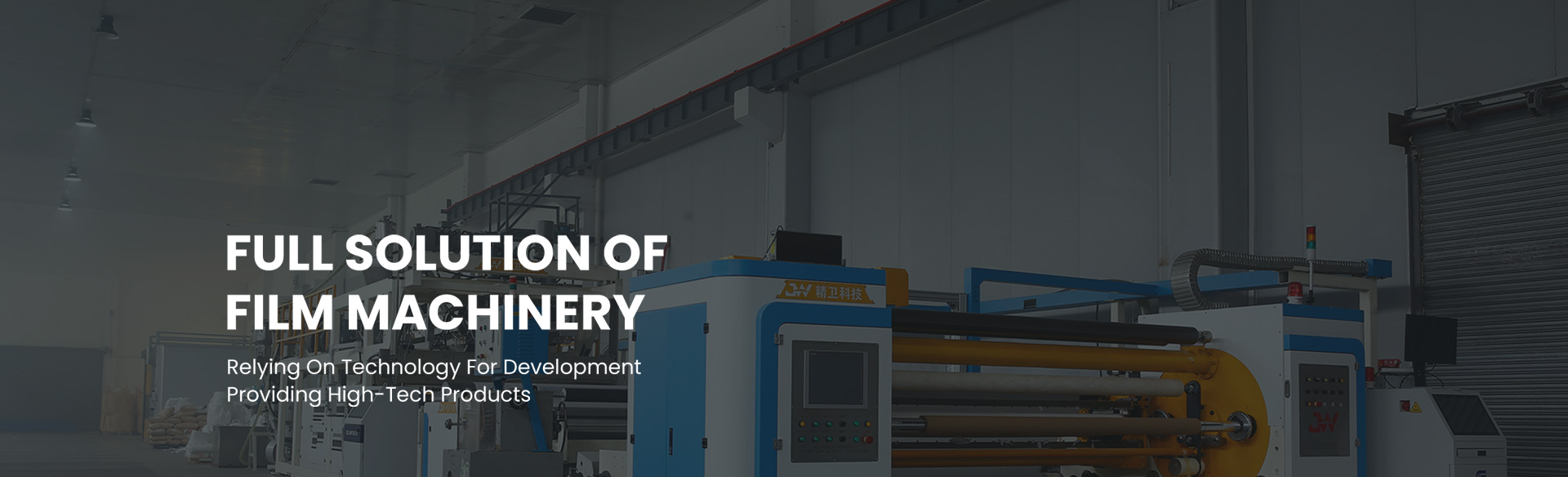
Hot melt laminating machines are widely used in packaging materials, medical films, industrial protective films, and composite materials. The process bonds two or more substrates together using a thermoplastic adhesive layer that becomes liquid when heated and solidifies again after cooling. Because the bonding process relies on precise temperature control, coating uniformity, and web tension stability, the laminating workflow must be carefully engineered to achieve consistent product quality.
JINGWEI provides integrated film processing solutions including film casting machines, Slitting and inspection rewinding machines, Printing equipment, lamination systems, silicone coating machines, winding upgrades, and palletizing automation. Through coordinated equipment design, hot melt laminating systems can be integrated into complete film converting production lines.
Material Feeding And Web Preparation
The laminating process begins with feeding the base substrates into the machine. These substrates may include plastic films, nonwoven materials, aluminum foil, paper, or other flexible materials depending on the final product structure.
Each substrate roll is mounted on an unwinding station equipped with tension control systems. These systems regulate the release of material to maintain stable web movement throughout the laminating process. Accurate web alignment and tension control are essential to prevent wrinkles, misalignment, or uneven bonding during lamination.
Proper substrate preparation ensures that materials enter the coating and bonding sections smoothly.
Hot Melt Adhesive Melting
Hot melt adhesives are typically supplied in solid form such as pellets or blocks. These adhesives are heated in a melting tank or adhesive heating unit where they reach a controlled liquid state.
The heating system maintains a stable temperature to ensure consistent adhesive viscosity. If the temperature is too low, the adhesive may not flow evenly during coating. If the temperature is too high, adhesive degradation may occur, affecting bonding performance.
Precise temperature management allows the adhesive to maintain optimal bonding properties during application.
Adhesive Coating Application
After melting, the adhesive is transferred to the coating system where it is applied onto one of the substrate materials. Coating systems may include slot die applicators, roller coating units, or gravure coating structures depending on the required coating precision.
The coating system spreads the adhesive evenly across the material surface to create a consistent bonding layer. Uniform coating thickness is essential to ensure reliable adhesion and prevent bonding defects.
Controlled adhesive application improves bonding strength and ensures stable lamination results.
Lamination And Pressure Bonding
Once the adhesive layer has been applied, the coated substrate meets the second material at the lamination section. Laminating rollers apply controlled pressure to bond the materials together.
During this stage, the adhesive remains in a molten state, allowing it to penetrate the surface structure of both substrates. The applied pressure ensures full contact between the layers, eliminating air pockets and ensuring consistent bonding across the entire web width.
Stable roller pressure and alignment are critical for maintaining uniform lamination quality.
Cooling And Bond Stabilization
After lamination, the composite material passes through cooling rollers or controlled cooling zones. Cooling allows the hot melt adhesive to solidify, permanently bonding the substrate layers together.
Uniform cooling ensures that the laminated structure maintains consistent thickness and bonding strength. Rapid and controlled cooling also helps stabilize the web structure before it enters the winding stage.
Cooling stability directly influences the durability and performance of the laminated product.
Rewinding And Finished Roll Formation
In the final stage of the process, the laminated material is wound into finished rolls. Rewinding systems maintain controlled tension and roll pressure to ensure consistent roll formation.
Proper winding prevents defects such as wrinkles, uneven roll density, or edge misalignment. Finished rolls must maintain structural stability during storage, transportation, and downstream processing operations such as slitting or packaging.
Stable rewinding ensures that laminated materials remain easy to handle and process.
Ensuring Stable Laminating Production
Hot melt laminating machines require precise coordination between adhesive heating systems, coating units, laminating rollers, cooling structures, and winding systems. Each stage of the process influences final product performance and production efficiency.
Through integrated equipment engineering, manufacturing quality control, and system-level production design, JINGWEI supports manufacturers with reliable hot melt laminating solutions capable of meeting modern industrial production requirements and high-volume converting operations.