


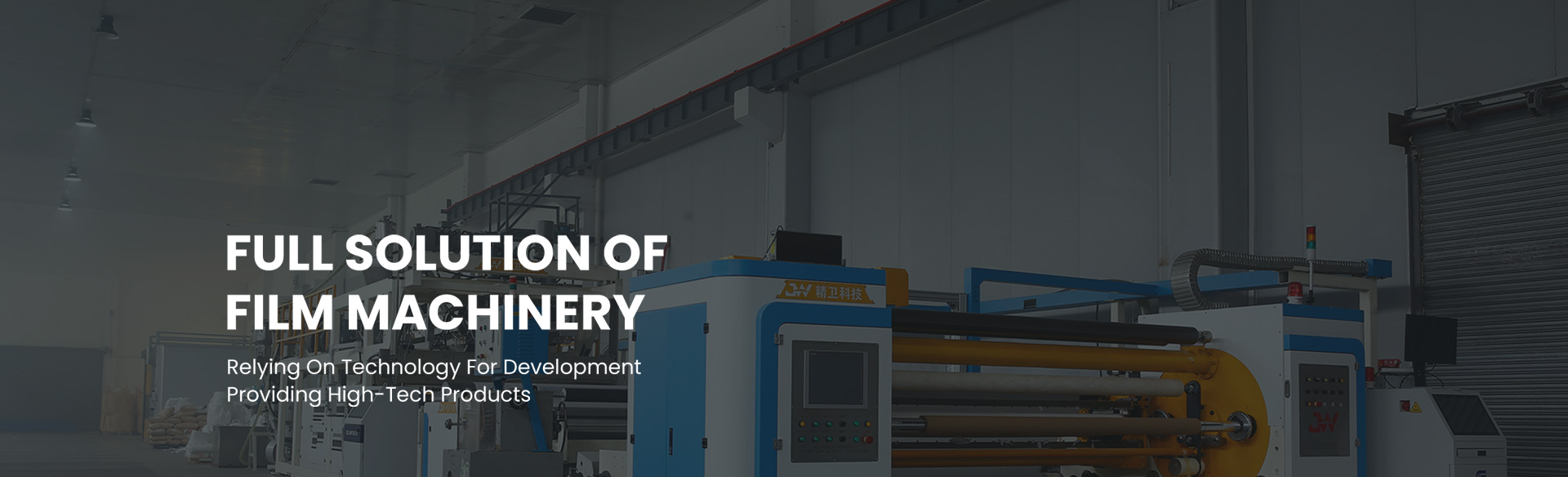
In modern film converting and packaging industries, slitting machines play a crucial role in transforming large master rolls into smaller finished rolls ready for downstream processing or distribution. Many plastic films, laminated materials, and coated substrates are produced in wide web formats during extrusion or casting processes. These wide rolls must then be precisely divided into narrower rolls to meet the specifications required for packaging, Printing, or industrial applications. Understanding how slitting machines perform this conversion helps manufacturers ensure production accuracy and maintain stable roll quality.
JINGWEI provides integrated film processing solutions including film casting machines, slitting and inspection rewinding machines, printing equipment, lamination systems, silicone coating machines, winding upgrades, and palletizing automation. Through coordinated equipment design and converting system integration, wide web materials can be processed efficiently into finished product rolls.
Unwinding The Master Roll
The slitting process begins with the unwinding of a large master roll produced by upstream equipment such as film casting lines or extrusion systems. The master roll is mounted onto the unwinding shaft of the slitting machine.
Unwinding systems are designed to control web tension as the material is released from the roll. Stable tension is essential because uneven tension can cause wrinkles, web misalignment, or material stretching. Tension control mechanisms such as load cells, brake systems, and dancer rollers help maintain smooth material flow during unwinding.
Proper unwinding stability ensures that the web enters the slitting section without distortion.
Web Guiding And Alignment
Before the film reaches the cutting section, web guiding systems ensure that the material remains properly aligned across the machine path. Sensors detect edge position and automatically adjust guiding rollers to correct any lateral movement of the web.
Maintaining accurate web alignment is important for precise slitting results. Even small deviations in web position can affect final roll width accuracy and cause uneven edges.
High-speed slitting operations rely heavily on accurate web guiding to maintain consistent product dimensions.
Precision Slitting Process
Once the web is properly aligned, it enters the slitting section where cutting tools divide the wide material into narrower strips. Several slitting technologies may be used depending on the material type and required precision.
Rotary knife systems are commonly used for plastic films and laminated materials because they provide clean and accurate cuts during continuous operation. The spacing between cutting blades determines the final width of each finished roll.
Precise blade positioning ensures that each slit section maintains uniform width and clean edges. Accurate cutting is essential for ensuring that the finished rolls meet customer specifications.
Tension Control During Rewinding
After the web has been slit into multiple narrower strips, each strip is guided toward its own rewinding shaft. Tension control continues to play a critical role during this stage of the process.
If tension is too high, the film may stretch or deform during winding. If tension is too low, rolls may become loose or uneven. Slitting machines use controlled torque systems and tension regulation mechanisms to maintain stable winding conditions.
Balanced tension ensures that finished rolls maintain consistent density and structural stability.
Finished Roll Formation
The final stage of the slitting process is roll formation. Each slit strip is wound into a finished roll with controlled pressure and alignment.
Proper roll formation ensures that the edges remain straight and the roll structure remains stable during storage and transportation. Consistent winding also prepares the rolls for downstream processes such as printing, laminating, packaging, or distribution.
High-quality winding systems help prevent roll defects such as telescoping, loose edges, or uneven roll density.
Supporting Efficient Film Converting Operations
Slitting machines serve as a critical link between large-scale film production and final product preparation. By accurately converting wide master rolls into multiple finished rolls, slitting equipment enables flexible production and efficient material utilization.
Through integrated equipment development, manufacturing quality control, and system engineering, JINGWEI supports film converting operations with reliable slitting and rewinding equipment designed to maintain stable processing performance and high production efficiency.