


Understanding Cast Film Line Production Workflow From Resin To Roll
Cast film production is a widely used process in plastic Film Manufacturing, particularly for packaging materials, hygiene films, protective films, and industrial applications. Compared with other film forming methods, cast film technology offers excellent thickness uniformity, high surface quality, and efficient high-speed production capability. Understanding the complete production workflow from raw resin to finished roll helps manufacturers optimize equipment selection, improve production efficiency, and maintain stable product quality.
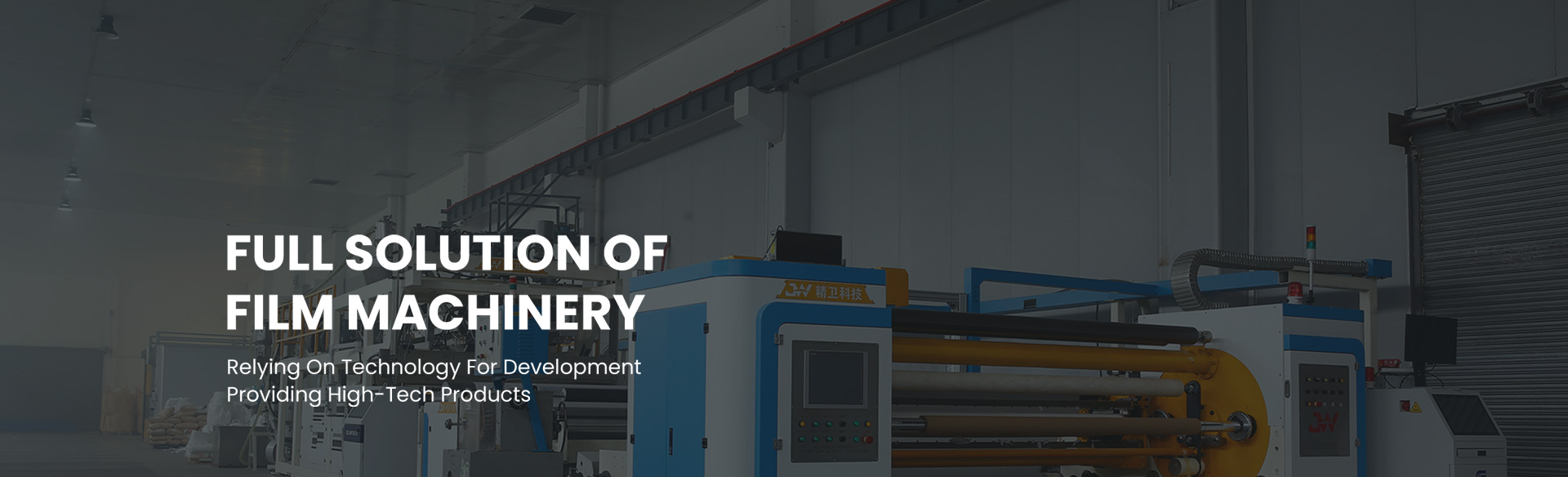
JINGWEI provides integrated film processing solutions including film casting machines, slitting and inspection rewinding machines, Printing equipment, lamination systems, silicone coating machines, winding upgrades, and palletizing automation. Through integrated equipment engineering and production system design, cast film production lines can achieve stable and efficient manufacturing performance.
Resin Feeding And Material Preparation
The cast film process begins with preparing the polymer raw materials used for film production. Plastic resins such as polyethylene, polypropylene, or other functional polymers are loaded into feeding systems and delivered into the extrusion unit.
In many applications, additives such as slip agents, anti-blocking materials, stabilizers, or pigments are blended with the base resin to achieve specific film properties. Accurate material dosing and mixing ensure that the final film maintains consistent physical characteristics throughout the production run.
Stable feeding systems are essential for maintaining uniform material supply and preventing fluctuations in melt flow during extrusion.
Extrusion And Melt Plasticizing
Once the material enters the extruder, the screw rotation transports the polymer pellets through the heated barrel. Multiple temperature zones gradually melt the polymer while the screw compresses and homogenizes the material.
During this stage, the extruder must maintain stable temperature control and pressure balance to ensure uniform melt quality. The design of the screw and barrel directly affects plasticizing efficiency, material mixing performance, and overall extrusion stability.
A well-designed extrusion system ensures that the molten polymer exits the extruder with consistent viscosity and flow characteristics before entering the casting section.
Melt Filtration And Distribution
Before the molten polymer reaches the casting die, it passes through melt filtration systems that remove impurities or unmelted particles. Filtration protects the die and downstream equipment from contamination while improving film surface quality.
After filtration, the melt enters a distribution system that ensures even flow across the entire width of the die. Uniform melt distribution is essential for producing films with consistent thickness across the web.
Pressure stability within the melt flow channel plays a critical role in maintaining film uniformity during high-speed production.
Film Casting And Cooling
The molten polymer exits the flat die as a thin sheet and immediately contacts a cooled casting roller. This chilled roller rapidly reduces the temperature of the film, transforming the molten polymer into a solid film structure.
The casting process requires precise control of temperature, pressure, and surface contact conditions. Uniform cooling ensures consistent film thickness, smooth surface appearance, and stable mechanical properties.
Additional rollers may guide the film through the cooling section while maintaining stable web tension and alignment.
Thickness Control And Web Handling
After cooling, the film passes through web handling systems that control tension and maintain alignment across the production line. Thickness measurement devices may monitor the film in real time to ensure product consistency.
Maintaining stable web tension is essential to prevent wrinkles, stretching, or uneven film distribution. Automated control systems adjust operating parameters to maintain stable production conditions during long production cycles.
These systems contribute to consistent product quality and efficient line operation.
Winding And Finished Roll Formation
The final stage of the cast film production process is the winding section. Here the film is collected into finished rolls while maintaining precise tension control to ensure proper roll density.
Stable winding systems help prevent roll defects such as telescoping, loose edges, or uneven roll structure. Finished rolls must maintain consistent shape and structural integrity during storage, transportation, and downstream converting processes.
High-quality winding systems improve overall production efficiency and reduce material waste.
Achieving Stable Cast Film Production
Cast film manufacturing requires precise coordination between extrusion systems, melt distribution, cooling structures, tension control systems, and winding equipment. Each stage of the production workflow influences the final film quality and operational efficiency of the production line.
Through integrated equipment engineering, manufacturing quality control, and coordinated system design, JINGWEI supports film manufacturers with reliable cast film production solutions capable of meeting modern industrial manufacturing standards and large-scale production demands.
Previous:
Next: A Technical Breakdown Of Blown Film Extrusion Processes