


A Technical Breakdown Of Blown Film Extrusion Processes
Blown film extrusion is one of the most widely used plastic processing methods in the packaging and industrial materials industry. The process converts polymer pellets into thin plastic films used for packaging bags, agricultural films, protective covers, and industrial liners. Because film quality depends heavily on temperature control, air pressure balance, and mechanical stability, understanding the technical structure of the blown film extrusion process is essential when designing or sourcing production equipment.
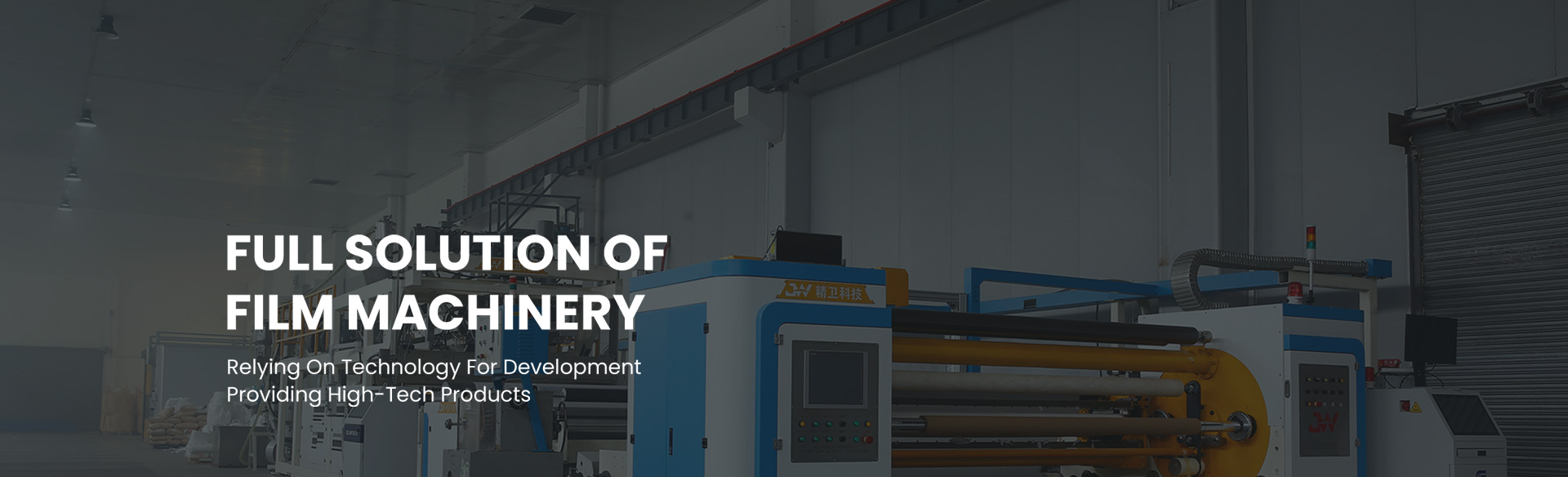
JINGWEI provides integrated film processing solutions including film casting machines, slitting and inspection rewinding machines, Printing equipment, lamination systems, silicone coating machines, winding upgrades, and palletizing automation. With strong engineering capabilities in film processing equipment, complete production workflows can be designed to support stable Film Manufacturing.
Raw Material Feeding And Plasticizing
The blown film extrusion process begins with feeding polymer raw materials into the extrusion system. Plastic pellets such as polyethylene or polypropylene are loaded into a hopper and transported into the extruder barrel by a rotating screw.
Inside the barrel, controlled heating zones gradually increase the temperature of the polymer until it reaches a molten state. The screw simultaneously compresses and mixes the material, ensuring that the melt becomes uniform before entering the die head. Proper screw design and temperature control are critical to achieving stable melt pressure and consistent material flow.
Material additives such as color masterbatch, slip agents, or UV stabilizers may also be introduced during this stage depending on the required film performance.
Melt Filtration And Pressure Stabilization
Before the molten polymer reaches the die head, it typically passes through a filtration system that removes impurities or unmelted particles. Melt filters and screen changers help maintain clean material flow and protect downstream equipment from contamination.
Maintaining stable melt pressure is essential for consistent film thickness. Pressure fluctuations can lead to uneven bubble formation and unstable film structure. High-quality extrusion systems include precise pressure control mechanisms that stabilize the melt flow before the material enters the die head.
Effective filtration and pressure control significantly improve final film quality and reduce production defects.
Die Head Formation And Bubble Creation
The molten polymer exits the extruder through an annular die head that shapes the material into a thin tubular structure. At this stage, compressed air is introduced into the center of the tube, inflating it into a bubble.
The bubble expands vertically while being cooled by surrounding air. The ratio between the bubble diameter and the die diameter, often referred to as the blow-up ratio, determines the orientation and mechanical properties of the film.
Precise control of air pressure, cooling airflow, and bubble stability is essential for maintaining uniform film thickness and preventing bubble collapse during operation.
Cooling And Film Stabilization
After the bubble is formed, cooling systems reduce the temperature of the molten film to stabilize its structure. Air rings positioned around the die head direct controlled airflow onto the expanding bubble.
Uniform cooling ensures that the polymer solidifies evenly across the film surface. Inconsistent cooling can result in thickness variations, wrinkles, or structural weaknesses in the film.
Cooling efficiency directly influences production speed and final product quality. Advanced air ring designs and airflow control systems help maintain stable bubble geometry during high-speed production.
Film Collapsing And Winding
Once the film bubble has cooled and reached sufficient structural stability, it passes through collapsing frames that flatten the tubular film into a double-layer sheet. The flattened film is then guided through tension control systems toward the winding unit.
The winding system collects the finished film into rolls while maintaining controlled tension to prevent wrinkles or deformation. Proper tension control ensures that film rolls maintain consistent density and alignment, which is important for downstream converting processes such as printing or slitting.
Stable winding performance improves storage quality and reduces material handling issues.
Process Stability And Production Efficiency
Achieving consistent production performance in blown film extrusion requires coordination between multiple mechanical and process control systems. Temperature control, pressure stability, bubble balance, cooling efficiency, and tension management all contribute to final film quality.
Manufacturers must carefully design extrusion systems, die structures, cooling components, and control systems to maintain stable operation under continuous industrial production conditions.
Through integrated equipment engineering and manufacturing quality control, JINGWEI supports film processing operations with reliable machinery solutions designed to maintain consistent production performance and support large-scale industrial manufacturing.