


Blown film production plays a central role in manufacturing packaging films, industrial liners, agricultural films, and protective materials. As demand increases, many manufacturers expand capacity by purchasing multiple blown film lines within a single project. However, scaling equipment orders introduces new challenges that go beyond simple machine procurement. Issues such as engineering consistency, manufacturing capacity, installation coordination, and operational stability must all be carefully managed.
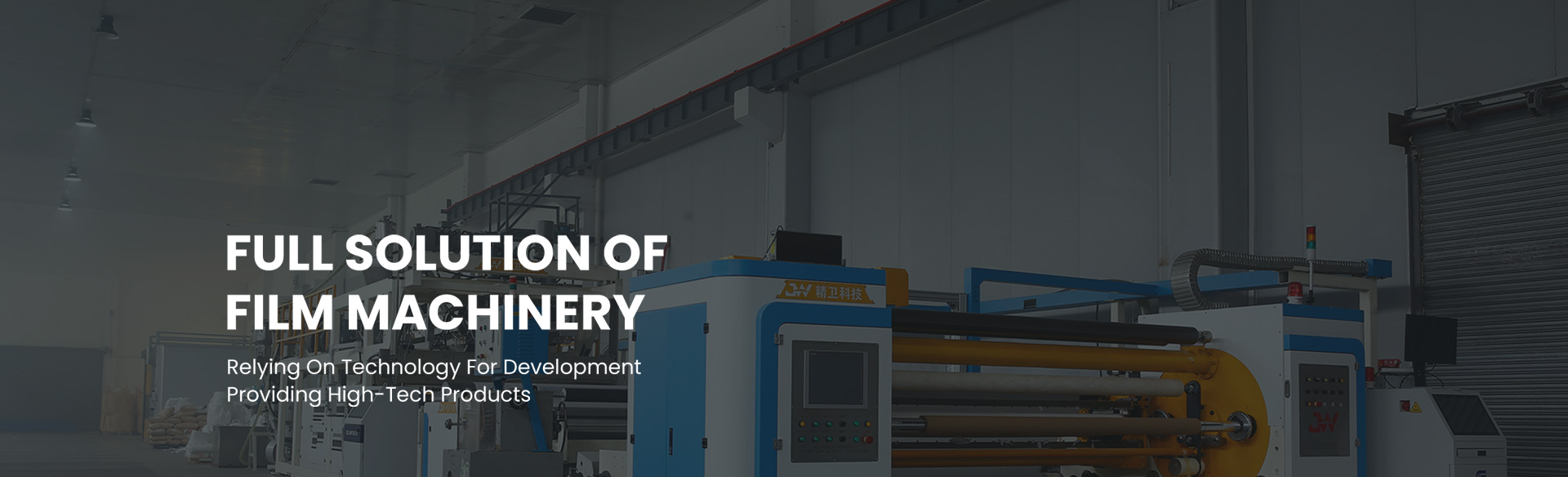
JINGWEI provides integrated film processing equipment including film casting machines, Slitting and inspection rewinding machines, Printing equipment, lamination systems, silicone coating machines, winding upgrades, and palletizing automation. Through manufacturer-led project planning, large-scale film production systems can be implemented with coordinated equipment design and stable long-term operation.
Engineering Consistency Across Multiple Production Lines
When several blown film lines are ordered at the same time, maintaining consistent engineering standards becomes essential. Small differences in extrusion configuration, die geometry, or control systems can lead to variations in film thickness stability, bubble control, and output efficiency between machines.
Standardizing equipment architecture helps ensure that each production line performs according to the same operational parameters. This includes maintaining consistent extrusion screw design, die head structure, temperature control systems, and winding configurations. Consistent engineering also simplifies operator training and improves production predictability.
Manufacturing Capacity And Delivery Management
Producing multiple blown film lines simultaneously places significant demands on a manufacturer’s machining and assembly capacity. Core components such as extrusion barrels, screws, dies, rollers, and control cabinets must be produced according to strict tolerance standards.
Without proper production scheduling, equipment delivery may be delayed or manufacturing quality may become inconsistent. Evaluating a supplier’s machining capability, assembly resources, and quality control procedures is therefore an important step when placing large equipment orders.
Reliable manufacturers typically implement structured production planning and quality checkpoints to maintain consistent manufacturing standards across all machines in a bulk project.
Installation And Commissioning Coordination
Large equipment projects often involve multiple machines arriving at a factory site within a limited time window. Coordinating installation teams, utilities, and commissioning procedures becomes more complex as the number of production lines increases.
Proper planning should include equipment layout design, power supply requirements, cooling system capacity, and compressed air infrastructure. Installation schedules should be organized so that commissioning engineers can sequentially verify each machine’s operation.
Structured commissioning procedures help ensure that each blown film line reaches stable operation without interfering with the startup of other production lines.
Quality Control And Performance Verification
Quality verification is especially important when multiple machines are produced for the same project. Each blown film line must pass standardized testing procedures before shipment.
Manufacturing quality control typically includes incoming component inspection, machining tolerance verification, assembly alignment testing, and electrical system validation. Factory acceptance tests confirm operational stability, extrusion temperature control performance, line speed capability, and winding stability.
Maintaining identical testing standards across all machines helps ensure consistent performance after installation.
Export Logistics And Equipment Protection
Transporting several blown film lines internationally requires careful logistics planning. Machines must be packed according to international transport standards to protect precision components from vibration, humidity, and corrosion.
Clear labeling, packing documentation, and container loading plans help ensure safe transportation and efficient customs clearance. Proper logistics planning also reduces delays during equipment arrival and installation preparation.
Managing Long-Term Production Expansion
Large equipment orders are often part of long-term capacity expansion strategies. Planning for future production growth during the initial project phase allows manufacturers to maintain consistent equipment architecture as new lines are added.
Standardized control systems, shared spare parts, and unified maintenance procedures simplify future upgrades and capacity expansion.
Through integrated engineering design, manufacturing control, and technical service support, JINGWEI helps manufacturers build scalable film production systems capable of supporting large industrial operations and long-term production growth.