


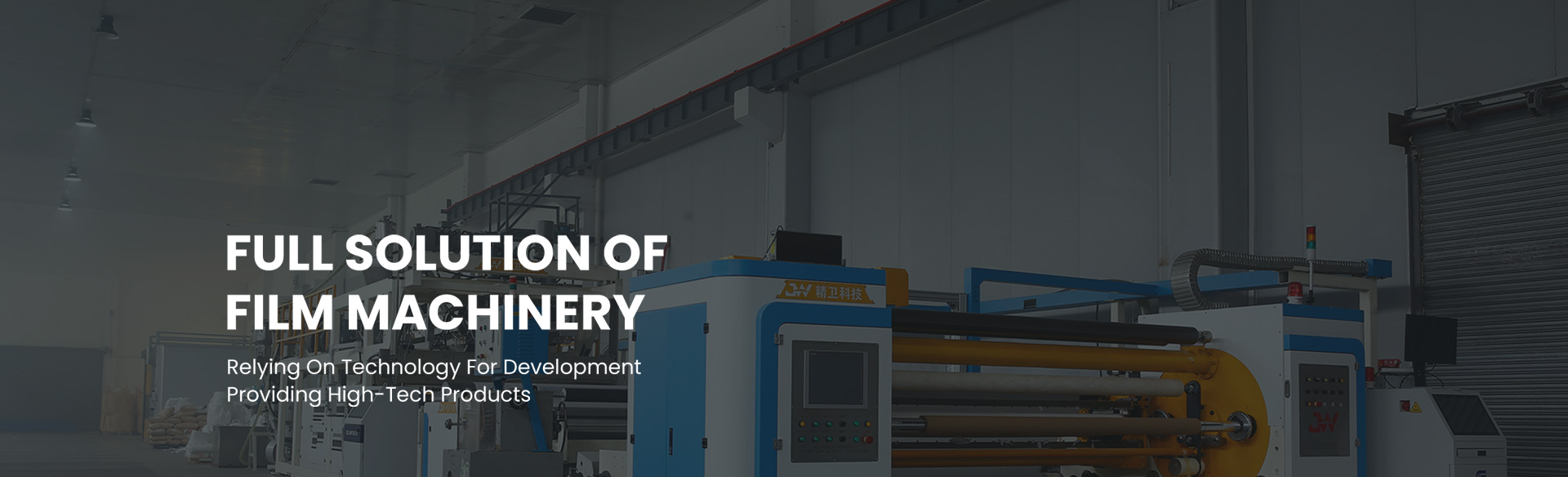
Customized extrusion equipment is widely used in film production, packaging materials, and industrial converting processes. Because each production environment has different material properties, output targets, and plant conditions, equipment cannot always be selected directly from standard models. Submitting clear and complete technical requirements is the first step toward developing a reliable customized extrusion system.
JINGWEI provides integrated equipment solutions including film casting machines, slitting and inspection rewinding machines, Printing equipment, lamination systems, silicone coating machines, winding upgrades, and palletizing automation. Through a structured OEM and ODM development process, customized extrusion equipment can be designed to match specific production goals and long-term operational needs.
Define Product Specifications Clearly
The most important technical requirement is the specification of the final product. Buyers should provide detailed information about the film or material that will be produced. Key parameters include product width, thickness range, output capacity, and roll dimensions.
Material type is equally important. Resin category, melt flow characteristics, filler materials, and additive content all influence screw design, extrusion temperature profiles, and filtration systems. When these parameters are defined clearly at the beginning of the project, equipment engineering can be designed more accurately.
Provide Production Capacity Targets
Production output directly determines the scale of extrusion equipment. Buyers should specify expected hourly output, maximum production speed, and typical operating conditions.
In addition to theoretical output capacity, manufacturers also evaluate practical production stability. Extrusion systems must maintain stable pressure, temperature, and material flow under continuous operation. Providing realistic production targets helps the manufacturer design an extrusion system capable of consistent performance rather than short-term peak output.
Describe Factory Installation Conditions
Plant infrastructure plays a major role in equipment configuration. Buyers should provide information about available power supply, cooling water systems, compressed air sources, and installation space.
Environmental factors such as ambient temperature, ventilation conditions, and floor load capacity can also affect equipment design. When manufacturers understand the factory environment early in the project, they can adapt machine layout and system configuration to ensure smooth installation and stable operation.
Clarify Downstream Processing Requirements
Extrusion equipment is often part of a larger converting line. Downstream equipment such as printing systems, lamination machines, slitting units, inspection rewinding machines, or automated packaging systems may need to be integrated into the production workflow.
Providing information about downstream processing helps the manufacturer design appropriate winding systems, tension control structures, and production line layouts. JINGWEI supports full workflow integration across film production, converting, and automated handling systems, allowing customized extrusion equipment to operate efficiently within a complete production line.
Confirm Quality Control And Testing Expectations
Before equipment manufacturing begins, buyers should discuss quality control procedures and testing requirements with the manufacturer. Factory acceptance tests should verify electrical safety systems, temperature control stability, line speed capability, and tension control performance.
Establishing clear acceptance standards ensures that both parties understand how equipment performance will be evaluated before shipment.
Consider Bulk Supply And Long-Term Equipment Planning
Many companies expand production capacity over time. When submitting technical requirements, buyers should consider long-term production planning. Standardizing key machine components across future equipment orders can simplify maintenance, reduce spare part inventory, and improve operational efficiency.
Bulk equipment planning also helps manufacturers schedule production capacity and prepare documentation for large equipment projects.
Achieving Reliable Custom Extrusion Solutions
Submitting detailed technical requirements allows manufacturers to convert production objectives into practical engineering solutions. When product specifications, plant conditions, and process requirements are clearly defined, customized extrusion equipment can be designed to deliver stable performance and long-term reliability.
Through integrated engineering development, manufacturing quality control, and remote technical support, JINGWEI supports customers in building efficient extrusion production systems that meet modern industrial manufacturing and export market standards.