


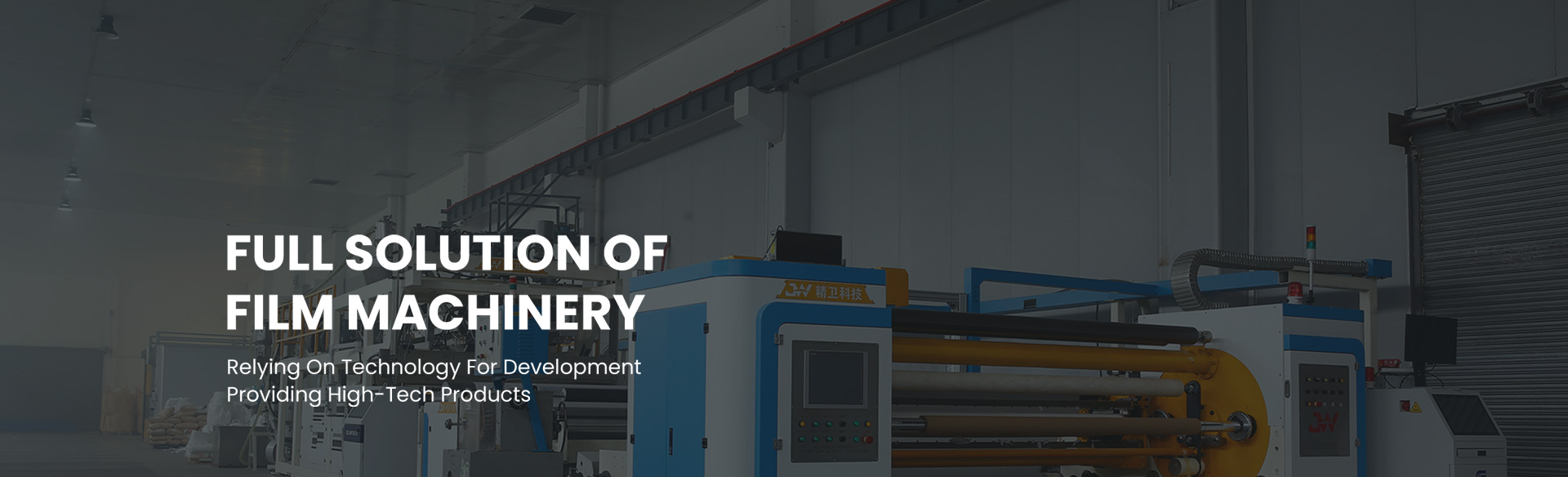
In the film converting industry, cast film production lines must balance extrusion stability, thickness accuracy, winding control, and downstream integration. For this reason, professional buyers increasingly prefer manufacturer-led OEM projects instead of simple equipment trading. A true OEM process transforms a product concept into a fully engineered production system, covering design planning, equipment manufacturing, quality inspection, export preparation, and commissioning.
JINGWEI focuses on providing integrated film production solutions covering film casting machines, Printing equipment, Slitting and inspection rewinding machines, lamination systems, silicone coating machines, winding upgrades, and palletizing automation. This integrated capability allows the entire film production workflow to be engineered under one technical framework, reducing compatibility risks between different production stages.
Manufacturer vs Trader In Film Machinery Procurement
When sourcing film casting equipment, the difference between purchasing directly from a manufacturer and buying through a trading company becomes significant during installation and operation.
Manufacturers control mechanical design drawings, machining tolerances, electrical architecture, and PLC programming. This allows technical changes, process adjustments, and system upgrades to be implemented quickly and accurately. Traders usually act as intermediaries and rely on external factories for engineering support, which often leads to slower problem resolution and limited customization capability.
A manufacturer can also provide process-level support including extrusion temperature settings, melt pressure balance, and tension control adjustments. These factors directly affect film thickness stability, roll hardness, and overall production efficiency.
OEM Workflow For Custom Film Casting Machines
A professional OEM project typically follows several structured stages.
Requirement Analysis
The project begins with defining the film structure, material type, product width, thickness range, and expected output capacity. Plant conditions such as power supply, cooling water systems, and available installation space are also evaluated.
Engineering Design
Based on production targets, the manufacturer designs the extrusion system, melt filtration system, casting die structure, chill roll temperature control system, thickness measurement system, and winding tension control configuration.
Manufacturing And Assembly
After design confirmation, equipment enters the manufacturing stage. Critical components such as rollers, dies, and extrusion screws are machined according to defined tolerance standards before final assembly.
Factory Testing
Before shipment, a Factory Acceptance Test verifies electrical systems, safety protection, control logic, and line stability under simulated production conditions.
Export Preparation
Machines are packed according to international transport requirements. Technical documentation, packing lists, and equipment manuals are prepared to ensure smooth customs clearance and installation.
Installation And Commissioning
After arrival, the manufacturer assists with installation, parameter calibration, operator training, and trial production to ensure the line reaches stable operation.
Quality Control And Manufacturing Standards
Quality control is essential for long-term production stability. Key checkpoints during equipment manufacturing include incoming component inspection, machining tolerance verification, assembly alignment checks, and electrical system testing.
JINGWEI integrates digital production management and remote diagnostic capability into its equipment systems. This allows production monitoring, troubleshooting support, and operational optimization through remote technical assistance, helping reduce downtime and improve production efficiency.
Project Sourcing Considerations For Bulk Equipment Orders
When planning large equipment projects, buyers should evaluate several factors before confirming an order:
Engineering capability and in-house design ownership
Manufacturing capacity and delivery lead time
Availability of technical documentation and acceptance standards
Quality inspection procedures during production
After-sales support and remote technical service capability
Careful evaluation of these factors helps ensure that the selected supplier can deliver reliable equipment and long-term operational support.
From Engineering Design To Stable Production
A successful OEM film casting machine project is defined not only by equipment delivery but by long-term production performance. When design engineering, manufacturing quality control, and commissioning services are integrated under a single manufacturer, the result is a more stable and efficient production line.
Through integrated equipment development and continuous technical service, JINGWEI supports customers in building reliable film production systems capable of meeting modern industrial manufacturing standards and export market requirements.