


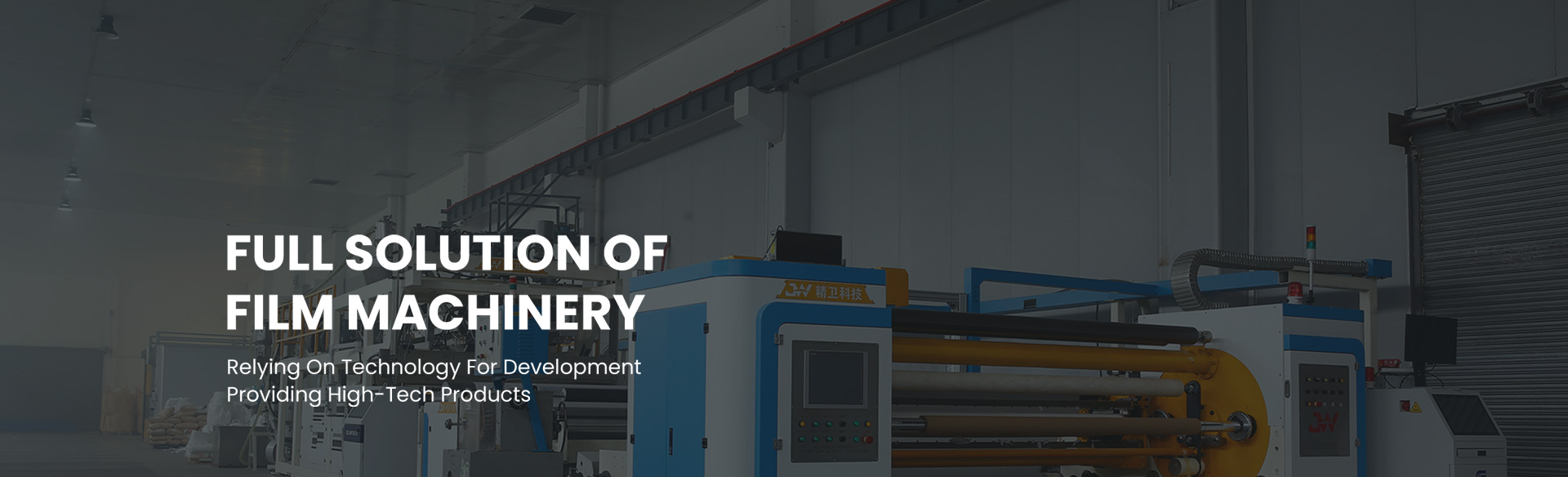
Selection Criteria for Rollers in Blown Film And Casting Lines
Engineering Standards, Material Requirements, and Procurement Considerations
Rollers are critical components in blown film and cast film production lines. They guide, support, cool, stretch, and stabilize plastic films during extrusion and downstream processing. Improper roller selection can result in surface defects, tension instability, film wrinkling, gauge variation, or premature mechanical wear.
For machinery manufacturers, OEM partners, and project investors, understanding the correct roller selection criteria ensures long-term line stability, product consistency, and reduced maintenance cost.
1. Roller Function Classification
Before selecting materials or structure, the roller’s function must be clearly defined.
1.1 Chill Rollers (Casting Lines)
Used for rapid cooling and solidification of molten film
Require precise temperature control
High surface smoothness required
Internal fluid circulation system
1.2 Guide Rollers
Maintain film path alignment
Require low friction surface
Must ensure concentric rotation
1.3 Nip Rollers
Apply controlled pressure
Maintain consistent film thickness
Require stable hardness and elasticity
1.4 Air Ring Support Rollers (Blown Film)
Assist bubble stabilization
Must tolerate dynamic film movement
Require smooth surface to avoid scratches
Each function demands different structural and material characteristics.
2. Material Selection Standards
2.1 Base Roller Body Material
Common base materials include:
High-grade alloy steel
Carbon steel with precision machining
Stainless steel for corrosion resistance
Roller core material must provide:
High structural rigidity
Thermal stability
Resistance to bending under load
For wide-format film lines, deflection resistance becomes critical to maintain uniform tension.
2.2 Surface Coating Requirements
Surface coating significantly influences film quality.
Common surface treatments:
Hard chrome plating
Mirror polishing
Ceramic coating
Teflon or non-stick coating
Selection depends on processed materials:
Sticky polymers require non-stick surfaces
Abrasive fillers require hardened coating
Optical films require ultra-low surface roughness
Typical surface roughness values may range from Ra 0.02 to Ra 0.4 microns depending on application.
3. Thermal Control Considerations (Casting Lines)
Chill rollers in casting lines must meet strict thermal control requirements:
Internal spiral cooling channels
Uniform temperature distribution
Balanced coolant flow design
Surface temperature tolerance control
Uneven cooling leads to film thickness inconsistency and internal stress.
Material must also withstand thermal cycling without distortion.
4. Dimensional Accuracy and Concentricity
High-speed film lines require:
Strict concentricity tolerance
Low radial runout
Dynamic balancing for high RPM
Poor alignment may cause:
Film vibration
Gauge fluctuation
Edge wandering
Advanced CNC machining and dynamic balancing ensure stable performance.
5. Load-Bearing and Deflection Control
Wide blown film and cast film lines generate significant tension loads.
Selection criteria must include:
Roller diameter appropriate for span width
Shaft strength and bearing selection
Wall thickness to prevent bending
Finite element analysis for structural validation
Larger diameters reduce deflection and improve web stability.
6. Surface Hardness Standards
Surface hardness impacts durability.
Chrome-plated rollers often reach HRC 55–60
Ceramic-coated rollers may exceed HRC 60
Nitrided surfaces improve wear resistance
For glass-filled polymers, high-hardness surfaces are strongly recommended.
7. Corrosion Resistance Requirements
Certain films release chemical byproducts during extrusion, including acidic vapors.
Corrosion-resistant rollers may require:
Stainless steel cores
Nickel alloy plating
Anti-corrosion coating layers
Material choice should match processed polymer chemistry.
8. OEM / ODM Customization Options
Customized roller solutions may include:
Anti-static coating integration
Micro-embossed surface patterns
Enhanced cooling channel design
Reinforced shaft structures
Lightweight aluminum alloy cores for specific applications
Engineering collaboration during OEM development ensures compatibility with extrusion speed, film type, and plant conditions.
9. Bulk Supply and Project Procurement Considerations
When sourcing rollers for large production lines:
Define processed film types
Confirm maximum line speed
Specify working temperature range
Verify dynamic balance certification
Request surface roughness inspection reports
Confirm coating thickness documentation
Clear technical specifications prevent post-installation performance issues.
10. Quality Control Checkpoints
Professional manufacturers implement:
Raw material verification
Heat treatment inspection
Surface roughness measurement
Hardness testing
Dynamic balancing verification
Concentricity inspection
Cooling channel pressure testing
Comprehensive inspection ensures reliability in continuous 24-hour production environments.
11. Export Market Compliance
For international machinery projects, roller suppliers may need to provide:
Material certificates
Surface treatment documentation
Pressure testing reports for chill rollers
Safety compliance declarations
Compliance documentation supports cross-border machinery supply and project acceptance.
Conclusion
Roller selection in blown film and casting lines depends on structural strength, surface treatment, thermal performance, dimensional accuracy, and compatibility with processed materials. Proper engineering design and manufacturing precision directly influence film quality, line stability, and operational lifespan.
For extrusion machinery manufacturers, OEM partners, and industrial investors, aligning roller material standards with processing requirements ensures consistent output, minimized downtime, and long-term performance reliability.